‘China Travel' boom drives May Day holiday rush at border crossings

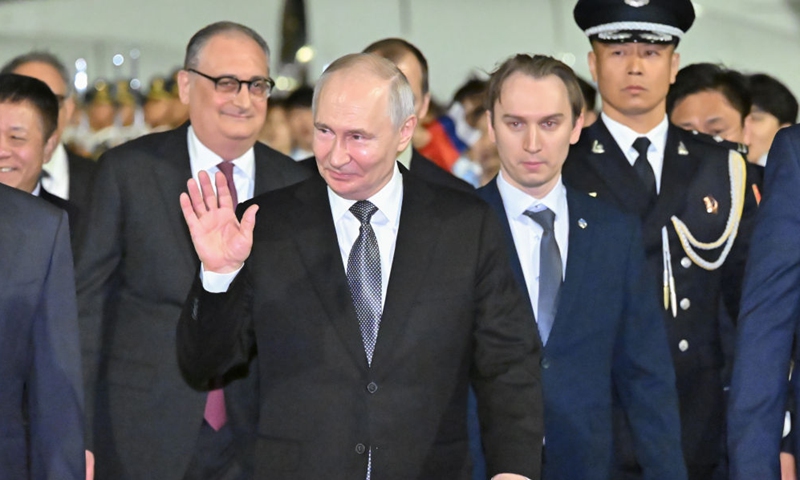
With the May Day holidays just around the corner, China is preparing for a two-way surge in cross-border travel, serving as a window into the country's consumption vitality. 

As inbound tourism evolves from "China Travel" to "Shopping in China," while outbound trips to Southeast Asia and Europe see double-digit growth, a market expert attributed the holiday trend to the services industry, which reflects China's high-level opening-up.

China's ports are expected to handle a peak in cross-border passenger flows during the May Day holidays, which runs from May 1 to May 5, with average daily inbound and outbound trips projected to reach 2.25 million and the single-day peak expected to exceed 2.4 million, the National Immigration Administration (NIA) said on Tuesday.

Inbound and outbound passenger flows at major international airports are expected to rise notably, with Shanghai Pudong International Airport projected to handle 102,000 border crossings per day, followed by Guangzhou Baiyun International Airport with 55,000 crossings and Beijing Capital International Airport with 49,000 crossings, said the NIA.

Similar outlooks are being announced by airlines and travel platforms. China Eastern Airlines said on Tuesday that on international routes, flights to destinations such as Kazan, Buenos Aires, San Francisco, Madrid, Maldives, Rome, Cairo, and Budapest have seen strong booking demand and high load factors. 

China Southern Group plans to operate about 4,200 flights on international and regional routes, a year-on-year increase of nearly 3 percent. Among these, Southeast Asian routes are scheduled to operate more than 2,100 flights, a year-on-year increase of 11 percent.

Hong Kong-based Cathay Pacific Airways said that during the May Day holidays, overall travel demand remains strong on routes such as Hong Kong to Beijing, Shanghai, and Chengdu, with bookings up significantly compared with the same period last year. Bookings for the Shanghai market are up more than 30 percent year-on-year, and bookings from Chengdu have risen 80 percent year-on-year.

A Beijing resident surnamed Cai told the Global Times on Tuesday that her cousin's family will come from Cambridge, the UK, to China for the May Day holidays.

"Their trip will include sightseeing, and they will visit the cities of Beijing, Huai'an, Suzhou, and Shanghai," Cai said, adding that the family will stay in China for three weeks.

The positive figures show that China is becoming an increasingly popular destination for international tourists, Yang Jinsong, a tourism expert with the China Tourism Academy, told the Global Times on Tuesday.

On the policy side, unilateral visa-free entry and other facilitation measures continue to be implemented effectively, significantly reducing the cost of cross-border travel and further enhancing the convenience and attractiveness of inbound and outbound tourism, said Yang.

The latest statistics released by the World Travel & Tourism Council showed that China's travel and tourism economy grew by 9.9 percent in 2025, more than twice as fast as the global average, and that China could become the world's largest tourism economy by 2030.

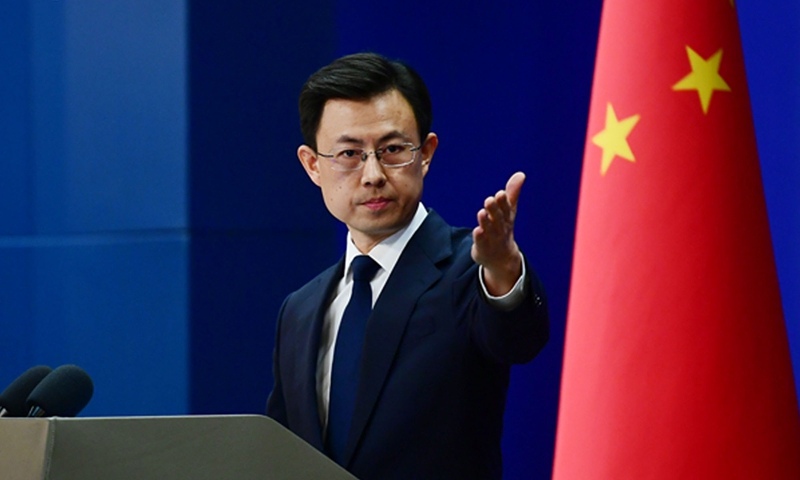
Guo Jiakun, a spokesperson of the Ministry of Foreign Affairs, was recently asked to comment on trends in tourism, with more and more foreign tourists changing the way they travel in China from simply sightseeing to having an immersive experience, and from having a glimpse into China to being integrated into the country

Guo said that these tourists come to China and discover its true charm beyond imagination, citing figures from the first quarter of 2026, which showed that the number of foreigners who entered China visa-free continued to increase, rising nearly 30 percent year-on-year.

During the May Day holidays, outbound travel continues to show strong momentum, with destinations concentrated in Southeast Asia and Europe. 

Data from industry information provider Umetrip showed that as of April 24, flight bookings from China to Southeast Asia for the holiday period were up by more than 26 percent year-on-year. Bookings to Indonesia, Laos, the Philippines, Thailand, and Vietnam each grew more than 30 percent year-on-year. 

The European market has also performed strongly, with flight bookings from China to Europe increasing by about 13 percent year-on-year. Scheduled flights by domestic carriers to Europe are up by more than 17 percent year-on-year.

Against the backdrop of expansion of visa-free policies and tax rebate facilitation have jointly driven the anticipated two-way surge in cross-border travel during the May Day holidays. Inbound "China Travel" has been gaining sustained momentum, with outbound tourism flourishing across multiple destinations, serving as a vivid reflection of China's high-level opening-up, Hu Qimu, a professor at the Maritime Silk Road Institute of Huaqiao University, told the Global Times on Tuesday.

In Hu's view, inbound travel serves as an important window into China's consumption confidence, as tourism is a vital industry that combines services, culture, and cross-border exchanges. The sustained growth of international visitors not only boosts domestic consumption but also signals global trust in China's open market policies. 

"When foreign tourists choose to spend their holidays in China - from bustling metropolises to quiet counties - they are not just sightseeing; they are experiencing and validating the vitality of the Chinese economy," Hu said.

Xinyang, Henan: Stable power supply ensures robust seedling growth

As spring returns to the land, farming activities are gradually picking up pace. On April 14, employees from the Guolutan Central Power Supply Station of State Grid Gushi County Power Supply Company visited the seedling cultivation factory of the Taiping Professional Planting Cooperative in Guolutan township. They conducted safety inspections and coordinated electricity needs, providing high-quality power services to safeguard spring plowing and irrigation.

This year, the Taiping Professional Planting Cooperative has seized the opportunity of agricultural modernization and invested in the construction of a new 30-mu seedling cultivation factory. Its single-season seedling cultivation capacity can meet the transplanting needs of 4,000 mu of farmland. Inside the factory, power supply service personnel inquired in detail about the cooperative's power needs during the spring irrigation and its subsequent electricity usage plans. They also conducted a thorough safety hazard inspection of key electrical equipment to ensure "zero-defect" operation.

To fully guarantee safe electricity use for spring plowing and irrigation, the local power supply department, focusing on the service needs of agriculture, rural areas, and farmers, has organized comprehensive special inspections of agricultural drainage and irrigation lines and transformers. Meanwhile, a "green channel" for spring plowing electricity use has been opened, simplifying the electricity application process to ensure "fast acceptance, fast survey, and fast power supply" for relevant applications. To date, more than 200 farmland irrigation wells in Gushi have completed the inspection and maintenance of their electrical equipment. The local power supply department will continue to support farmers in detecting potential electrical risks within irrigation systm, thereby guaranteeing zero-defect performance.

"With stable power, our minds are at ease. Looking at these sheds full of green seedlings, and with your 'zero-distance' attentive service, this year will be another harvest year," said Ding Zhifa, the head of the cooperative, pointing to the thriving seedlings in the greenhouses. Inside the seedling factory, lush greenery abounds. On the neatly arranged seedling trays, tender green seedlings stand tall and stretch out, vigorously accumulating strength and nurturing the hope for a new year's harvest.

Chinese dairy firm Haihe apologizes after livestream reportedly contained obscene, vulgar content

Tianjin Haihe Dairy Co issued an apology on Wednesday, saying that it has noticed relevant video content from a "Haihe Dairy Flagship Store" livestream account has had a negative impact on consumers and has sparked widespread public discussion and controversy.

"The company deeply feels remorse and would like to express its sincere apologies," Tianjin Haihe Dairy said in a statement posted on its official website on Wednesday. 

Earlier, relevant media reports revealed that the "Haihe Dairy Flagship Store" livestream account contained obscene and vulgar content. The male host made highly vulgar remarks while livestreaming the promotion of Haihe milk, including sexual innuendos, references to sex transactions, and inappropriate gestures, according to a report published on legaldaily.com.cn on Wednesday.  

In the statement, Tianjin Haihe said its investigation found that the livestream account was operated by a distributor cooperating with the company. It added that it had immediately terminated the partnership and revoked the distributor's authorization to operate under the name "Haihe Dairy Official Flagship Store."

Tianjin Haihe also said that it had initiated legal proceedings and would pursue legal accountability against the distributor for the damage caused to the brand's image. At the same time, the company said it bore undeniable supervisory responsibility and would seriously deal with those internally found responsible for oversight failures.

In addition, the company will conduct a full-channel investigation, immediately inspect all authorized distributor stores' livestreaming accounts, comprehensively regulate livestreaming and personnel management, and resolutely eliminate vulgar and illegal phenomena, the statement said.

China’s defense ministry urges New Zealand to restrain frontline forces, stop disruptive acts after NZ aircraft’s harassment in Yellow Sea and East China Sea

When asked to comment on the repeated recent activities of a New Zealand air force military aircraft near China's peripheral airspace, which have disrupted numerous civil aviation flights, Chinese Foreign Ministry spokesperson Guo Jiakun said at a regular press conference on Friday that a P-8A anti-submarine patrol aircraft of the New Zealand air force conducted continuous close-in reconnaissance and harassment in the airspace and waters of the Yellow Sea and East China Sea. Such actions undermine China's security interests, heighten the risks of misunderstanding and miscalculation, and severely disrupt civil aviation operations in relevant airspace.

China has taken firm and forceful response and lodged stern representations with the New Zealand side. China urges New Zealand to strictly abide by international law and basic norms governing international relations, respect China's sovereignty and security concerns, and safeguard the safety and order of civil aviation, Guo said.

Zhang Xiaogang, a spokesperson for China's Ministry of National Defense, also responded to the matter on Friday at a press conference. Zhang said that recently, a P-8A anti-submarine patrol aircraft of the New Zealand air force has conducted frequent close-in reconnaissance and harassment in the airspace and waters of the Yellow Sea and East China Sea in disregard of China's warnings. The Chinese military has taken professional and forceful measures to respond to and deal with the situation, and lodged stern representations with the New Zealand side.

Such acts by New Zealand undermine China's sovereignty and security, severely disrupt flight order in relevant airspace, and may easily trigger maritime and aerial incidents, Zhang said. "We urge the New Zealand side to exercise strict restraint on its frontline forces, immediately stop disruptive and irresponsible acts that jeopardize civil aviation safety, and prevent risks of misunderstanding and miscalculation," the spokesperson said.

Xi urges breaking new ground in high-quality development of service sector

Chinese President Xi Jinping has called for striving to break new ground in the high-quality development of China's service sector.

Xi, also general secretary of the Communist Party of China (CPC) Central Committee and chairman of the Central Military Commission, made the remarks in an instruction conveyed at a national conference on the service sector held in Beijing from Tuesday to Wednesday.

China's service sector has steadily expanded in scale and continuously improved in quality and efficiency since the 18th National Congress of the CPC, playing an important role in supporting industrial upgrading, meeting people's livelihood needs and driving job growth, according to Xi.

Underscoring demand-driven development, reform breakthroughs, technology empowerment as well as opening up and cooperation, Xi called for carrying out capacity-expanding and quality-upgrading initiatives in the service sector.

Efforts must be made to advance producer services toward greater specialization and the higher end of the value chain, foster high-quality, diverse and accessible consumer services, and build more "China Services" brands, he said.

China releases plan for new pilot FTZ in Inner Mongolia

The State Council has issued a major plan for establishing a new pilot free trade zone (FTZ) in North China's Inner Mongolia Autonomous Region, expanding the number of China's pilot FTZs to 23, the Xinhua News Agency reported on Thursday.

Pilot FTZs are an important strategy in advancing China's reform and opening-up, and the establishment of the China (Inner Mongolia) Pilot FTZ signals the upgrading of the country's broader FTZ strategy, and demonstrates China's firm commitment to expanding high-level opening-up and promoting high-quality development, experts noted.

The overall plan grants the China (Inner Mongolia) Pilot FTZ greater autonomy in reform and encourages pioneering, integrated, and differentiated exploration. It identified 19 reform and innovation measures, including developing cross-border trade, strengthening international logistics services, improving the efficiency of technology transfer and application, and expanding external exchanges in multiple fields, according to Xinhua.

The overall plan points out that establishing China (Inner Mongolia) Pilot FTZ is a major decision made by the Communist Party of China Central Committee and the State Council, and an important strategic measure to further deepen reform, promote high-level opening-up, and drive high-quality development.

According to the plan, China aims to develop the new pilot FTZ into a regional hub that connects China with external markets and serves surrounding areas by building an information exchange center, a transport and logistics center, a factor and resource allocation center, a key-field technological innovation center and an industrial cooperation center. 

The plan also stresses the need to pursue green development and strengthen ecological protection, alongside stepped-up national security and legal safeguards.

Inner Mongolia is an important bridgehead for China's opening to the north. In 2025, its total trade grew by 6.4 percent, 2.6 percentage points higher than the national average, according to customs data.

Amid growing trends of global protectionism and unilateralism, China sends a clear signal of commitment to greater opening-up through concrete actions, Li Yong, a senior research fellow at the China Association of International Trade, told the Global Times on Thursday. 

The plan follows a broader pattern of approvals for new FTZs across China, Li said, reflecting efforts to accommodate differentiated, locally tailored opening-up strategies.

Designated as an important bridgehead for China's northward opening-up, the pilot zone is set to become a high-level free trade park characterized by investment and trade facilitation, a favorable innovation ecosystem, concentrated competitive industries and active international engagement, according to the plan.

"The overall plan aims to turn Inner Mongolia's geographic advantage as a bridgehead for China's northward opening-up into institutional strength," said Zhou Mi, a senior research fellow at the Chinese Academy of International Trade and Economic Cooperation. 

Zhou told the Global Times that the plan aims to explore a model for high-level opening-up and high-quality development in border and ethnic minority areas. It also involves exploring markets in Central Asia, the Middle East, and other areas, while expanding the scope of cooperation in sectors such as the digital economy, tourism, agriculture and animal husbandry, healthcare, and education.

Zhou said that the new pilot FTZ could deliver multiple regional and international benefits. "By improving cross-border logistics and industrial linkages, the FTZ is expected to create new opportunities for neighboring countries participating in the Belt and Road Initiative and the China‑Mongolia‑Russia Economic Corridor, enhance the efficient use of resources, and help integrate China's border economies into broader Eurasian trade networks," he said.

The China (Inner Mongolia) Pilot FTZ covers 119.74 square kilometers and is organized into three specialized subzones designed to advance cross border trade, strategic emerging industries and regional opening-up, according to the plan. 

The Hohhot sub‑area will prioritize the development of strategic emerging industries such as new energy, new materials, biomedicine, and next‑generation information technology, while the Manzhouli sub‑area will focus on industries such as on‑shore processing of imported resources, cross‑border tourism, cross‑border finance, and port services, according to the plan. 

In addition, the Erenhot sub‑area will emphasize international trade, international logistics, cross‑border tourism, and international medical services, developing into an important hub of the China‑Mongolia‑Russia Economic Corridor and a model of friendly cooperation with neighboring countries, per the plan.

China is leveraging its vast market advantage and, through FTZs and other platforms, actively exploring higher levels of opening-up, demonstrating its commitment to sharing development opportunities globally, Li said.

Multiple Q1 indicators signal solid start for economy

Leading indicators on China's investment, consumption and foreign trade released recently by the State Information Center under the National Development and Reform Commission (NDRC) point to a solid start for the economy in the first quarter, CCTV News reported.

Investment picked up in the first quarter, with project construction accelerating. The excavator index showed the average nationwide operating rate of construction machinery rose by about 16 percentage points month-on-month in March and by about 4 percentage points from January, pointing to a broad rebound in infrastructure equipment activity.

"Supported by the rollout of policy measures, a concentration of major projects and improved weather conditions, the pace of economic activity accelerated in March," Bian Yongzu, an executive deputy editor-in-chief of Modernization of Management magazine, told the Global Times on Sunday.

Bian noted that infrastructure development has been advancing faster in central and western China, noting that the regions' vast size and relatively less-developed infrastructure, particularly in transport, leave significant room for growth, while increased government investment - especially in transport - further support the trend. He added that this is not only helping stabilize growth, but also promoting more balanced development between eastern and western regions.

Accelerated infrastructure development has been underpinned by stronger funding. The NDRC's estimates show that new special-purpose bond issuance nationwide rose 20.8 percent year-on-year in the first quarter, while the value of winning bids for projects related to computing infrastructure and software and hardware development increased by 4.7 percent. 

Investment in frontier fields such as artificial intelligence (AI) and humanoid robots surged 45.5 percent year-on-year, according to the NDRC data. Innovation momentum is strengthening as resources continue to concentrate in the AI sector. 

Alongside faster project construction, activity indices for start-ups and technology-driven firms both improved in the first quarter. The operating vitality index for start-ups rose 8.8 percent year-on-year, while that for tech-oriented enterprises increased 8.1 percent, underscoring AI's growing role as a key driver of new quality productive forces, the NDRC data showed.

Patent data also indicate robust innovation activity in the AI sector. In the first quarter, patent grants related to China's strategic emerging industries rose 8.7 percent year-on-year, with those in March alone rising 18.4 percent. AI-related patent grants surged 31.2 percent, pointing to steadily strengthening innovation momentum.

The faster issuance of special-purpose bonds and the marked acceleration in high-tech investment are closely tied to China's current stage of development, Wang Peng, an associate research fellow at the Beijing Academy of Social Sciences told the Global Times.

China has entered a stage where stronger self-reliance in science and technology is essential, with some fields already leading globally and others in close competition with developed economies, making faster indigenous innovation imperative amid a tightening external environment, Wang noted.

Bian said that China has multiple advantages in developing science and technology, with notable progress in infrastructure, basic research and applications boosting returns on tech investment and strengthening firms' willingness to increase high-tech spending, making it a key driver of rising investment.

China's six emerging pillar industries are expected to surpass 10 trillion yuan ($1.45 trillion) in total value in 2030, Zheng Shanjie, head of the NDRC, said in March. The combined output of sectors including integrated circuits, aviation and aerospace, biomedicine, the low-altitude economy, new types of energy storage, and intelligent robots approached 6 trillion yuan in 2025, Zheng said.

Meanwhile, the port "barometer" is also rebounding, underscoring sustained resilience in foreign trade. In the first quarter, the operating rate of port equipment nationwide rose markedly, registering both year-on-year and quarter-on-quarter growth, reflecting the steady strength of exports.

Average daily port cargo and container throughput rose 2.4 percent and 8.5 percent year-on-year, respectively, while the tonnage of departing and arriving vessels at major ports increased 9.6 percent and 5.4 percent.

Bian said that despite a complex and challenging external environment, exports maintained relatively stable growth, reflecting deepening global reliance on Chinese manufacturing. 

Wei Ying, an official at the State Information Center under the NDRC, said that China has made notable progress this year in expanding into emerging export markets, with a strong export performance to Belt and Road partner countries, adding that foreign trade is expected to continue providing solid support to economic growth, according to CCTV News.

The consumer market also saw a steady start with strengthening momentum. Since the beginning of the year, targeted policies including a new round of trade-in programs and coordinated fiscal and financial support have boosted demand. Online, the composite consumption index for lifestyle services rose 2.6 percent year-on-year in the first quarter, with notable gains in catering, hotel accommodation and leisure consumption.

In physical stores, consumption payments rose 3.4 percent year-on-year in the first quarter, up 2.2 percentage points from the fourth quarter. Goods consumption increased 5.2 percent, with faster growth in electronics and home appliances.

Counting on External Forces to Stir up Troubles at Sea by the Philippine Side Will Prove Self-defeating

Question: The Philippine Navy reportedly claimed that China may be taking advantage of the international attention on the conflict in the Middle East, citing a so-called escalation of harassment activities in the South China Sea as proof. The Philippine National Maritime Council also condemned the Chinese side for so-called dangerous maneuvers against Philippine vessels and personnel in the South China Sea. Do you have any comment on this?

Zhang Xiaogang: Recently, the Philippine side has intruded into the airspace over and the waters adjacent to China's Huangyan Dao and the  islands and reefs of China's Nansha Qundao, deliberately charged into the exercise and training zones of the Chinese side, and even closed in on Chinese vessels in a dangerous manner. It has repeatedly committed rights-violation and harassing acts against China, increasing factors of insecurity and instability in the Asia-Pacific region. We urge the Philippine side to stop counting on external forces to stir up troubles at sea, since such a scheme will prove self-defeating and fruitless. The Chinese side remains unwavering in our resolve to safeguard territorial sovereignty and maritime rights and interests. We will continue to take resolute countermeasures against any rights-violation and provocations.

China announces countermeasures against two EU financial institutions

China's Ministry of Commerce (MOFCOM) announced on Wednesday countermeasures against two financial institutions in the EU after the bloc listed two Chinese financial institutions in its sanctions against Russia. The measures will take effect immediately.

Organizations and individuals in China are prohibited from engaging in related transactions, cooperation and other activities with the two EU financial institutions, namely UAB Urbo Bankas and AB Mano Bankas, the ministry said, citing the country's Anti-Foreign Sanctions Law and the regulation on implementing the law.

China's move can be seen as a reciprocal countermeasure -  a clear and well-grounded response to the EU's long-arm jurisdiction and unilateral sanctions, said an expert.

EU's unilateral move

On July 18, the EU included two Chinese financial institutions in its 18th round of sanctions against Russia. This constitutes a serious violation of international law and the basic norms of international relations, and severely undermines the legitimate rights and interests of Chinese enterprises, said the MOFCOM on Wednesday.

Responding to media inquiry regarding China's countermeasures, a MOFCOM spokesperson said on Wednesday that recently, despite China's firm stance, the EU insisted on including two Chinese financial institutions on its sanctions list under the pretext of their involvement with Russia, and formally implemented the sanctions on August 9. This seriously violates international law and the basic norms of international relations, severely undermines the legitimate rights and interests of Chinese enterprises, and has a significant negative impact on China-EU economic and trade relations and financial cooperation. China firmly opposes this, the spokesperson said.

To resolutely safeguard its sovereignty, security, and development interests, and in accordance with China's Anti-Foreign Sanctions Law and other relevant laws and regulations, China has decided, upon approval by the national coordination mechanism for countering foreign sanctions, to place the two EU banks, UAB Urbo Bankas and AB Mano Bankas, on its countermeasures list, prohibiting domestic organizations and individuals from conducting related transactions or cooperation with them.

China hopes that the EU side will cherish the long-standing cooperative relationship forged between China and the EU as well as its members in the economic, trade and financial sectors, correct its wrongdoings, and stop undermining the interests of China as well as China-EU cooperation, said the ministry. 

The EU's sanctions against Chinese financial institutions on the grounds of alleged ties with Russia constitutes unilateral and hegemonic behavior, Jian Junbo, director of the Center for China-Europe Relations at Fudan University's Institute of International Studies, told the Global Times on Wednesday, adding that China's countermeasures are a justified response to such improper harm.

Jian emphasized that the EU must recognize that unilateral measures only exacerbate the situation. 

Countermeasures are reciprocal

EU's move to unilaterally include Chinese companies in its sanctions list and imposing penalties on two Chinese financial institutions based on groundless accusations violates international law and the basic norms of international relations, and has added more uncertainties to China-EU economic and trade exchanges, and undermined the scope and extent of China-EU cooperation, Zhang Jian, a vice president of the China Institutes of Contemporary International Relations, told the Global Times on Wednesday.

China's countermeasures are reciprocal and timely. Hopefully the EU will refrain from taking unilateral measures that damage China-EU economic and trade relations and the principles of international relations, and avoid continuing to escalate the tensions, Zhang said.

Previously, a MOFCOM spokesperson has already made clear responses after the EU announced last month sanctions including certain Chinese firms and financial institutions, the spokesperson said on July 21 that despite China's repeated representations and objections, the EU has insisted on including certain Chinese enterprises in its 18th round of sanctions against Russia and imposed sanctions on two Chinese financial institutions on unfounded charges. China expresses strong dissatisfaction and resolute opposition to this.

China has consistently opposed unilateral sanctions that lack a basis in international law and are not authorized by the UN Security Council. China urges the EU to immediately cease the wrongful practice of listing Chinese enterprises and financial institutions, said the MOFCOM spokesperson, noting that China will take necessary measures to resolutely safeguard the legitimate rights and interests of its enterprises and financial institutions.

China's foreign ministry spokesperson Guo Jiakun also said on July 21 in responding to media inquiry that China opposes any unilateral sanctions that have no basis in international law or the authorization of the UN Security Council. The normal exchange and cooperation between Chinese and Russian companies should not be disturbed or affected. We urge the EU to stop harming the lawful interests of Chinese companies without any factual basis. China will do what is necessary to firmly safeguard the legitimate and lawful rights and interests of Chinese companies, Guo added.

Against the backdrop of complex and volatile international situations, the growth of China-EU economic and trade momentum is beneficial to both sides, Zhang said. 

China's move can be seen as a reciprocal countermeasure - a clear and well-grounded response to the EU's long-arm jurisdiction and unilateral sanctions, Li Haidong, a professor at China Foreign Affairs University, told the Global Times on Wednesday, noting that it is aimed at safeguarding the legitimate business rights of Chinese financial institutions.

"The EU cannot expect to harm China without facing any consequences. Its sanctions on Chinese financial institutions, imposed under the pretext of the Russia-Ukraine conflict, reflect the bloc's arrogance and its belief that it stands above others in international affairs," Li said.

Int'l experts laud China's achievement in climate governance

Despite it being her first academic visit to Harbin, capital of China's northernmost Heilongjiang Province, Bronwyn Wake, chief editor of the journal Nature Climate Change, was immediately blown away by the professionalism of the Chinese scholars.

China possesses a robust community of scholars dedicated to the governance of climate change and understanding its economic impacts, Wake said, expressing her anticipation for greater Chinese wisdom in global cooperation efforts in these fields.

Wake came to Harbin Institute of Technology to attend the International Conference on Climate Leadership, joining experts from countries including the United Kingdom and Spain. During the conference, they engaged in deliberations on issues such as international climate cooperation and low-carbon technological innovation.

Wake said that Nature Climate Change covers a wide range of topics, such as the climate system, biological science, climate change, and related policies, on which Chinese researchers have delivered a body of exceptional research.

She noted that Chinese scholars have not only explored ways to advance domestic climate governance but also contributed valuable solutions that enhance cooperation in global climate change. The research forms the foundation for effective, coordinated climate policies.

"China has always played an important role in international climate negotiations, such as the Paris Agreement," Wake said, expressing the hope that China will continue to drive the global climate agenda and support international cooperation.

In the view of Kannan Govindan, a professor at the University of Adelaide in Australia, China's thriving renewable energy sector serves as a crucial pillar in support of global climate action.

Govindan noted that as extreme weather increasingly disrupts the reliability of global supply chains, China's rapidly advancing clean energy technologies -- such as solar panels, wind turbines, and hydroelectric power plants -- are not only lowering global energy production costs but also supporting infrastructure development in various countries. As a result, this strengthens the resilience of supply chains.

He further noted that beyond developing clean energy technologies, China is advancing climate-resilient infrastructure through pilot initiatives for eco-cities and sponge cities, which are unique climate governance practices that have garnered global scholarly attention.

China has put in place a robust policy framework for carbon peaking and carbon neutrality, with tailored implementation plans spanning energy, industry, transportation, commerce, construction and other sectors, said Yuan Jiashuang, deputy director of China's National Climate Center, during the event.

According to the National Energy Administration, as of the end of June, China's installed capacity for wind power generation has reached 570 million kilowatts, up 22.7 percent year on year, while solar power capacity rose 54.2 percent year on year to 1.1 billion kilowatts.

Climate change-driven impacts such as altered water resource distribution and increased extreme weather events have exerted far-reaching effects on economies and societies, said Ma Chaode, assistant resident representative of the United Nations Development Programme (UNDP) in China.

Against the backdrop, China's carbon peaking and carbon neutrality goals have offered a roadmap for global climate governance, Ma said.

Ma looks forward to seeing China continue to exert its influence in technology and funding in the future, and propel the global community to meet carbon emission goals by advancing technological innovation, fostering new mindsets, boosting financial investment and raising public awareness.