An explosion occurred at a street-facing shop on Friday in northeast China's Liaoning Province, leaving two people dead and 13 others slightly injured, according to local fire authorities.
The blast, caused by a suspected liquefied gas cylinder leak, took place at 6:42 a.m. at the shop in a residential building in Benxi City. The shop covers about 35 square meters.
The injured have been sent to hospital for treatment. The cause of the accident is under investigation.
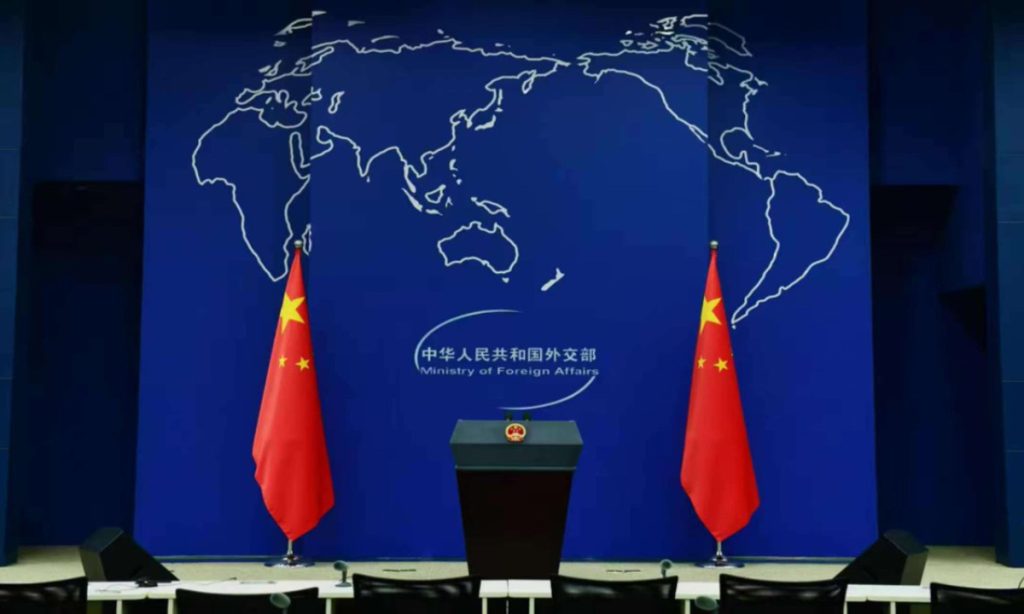
The US side has doubled down on its blockade and sanctions on Cuba, going so far as to add Cuban leaders to its sanction list. That once again reveals the US hegemonic and domineering behavior and bullying practices. China firmly opposes it, the Chinese Foreign Ministry spokesperson said on Friday in response to a question about US’ sanctions on Cuban President Miguel Diaz-Canel and some affiliated people and entities, including Diaz-Canel’s wife and stepson and Cuban leader Raúl Castro’s son and grandson.
A stable Cuba is what the international community wants to see, and any attempt from the US to destabilize Cuba will eventually backfire, the spokesperson said.
In response to the US’ sanctions, Cuban President Diaz-Canel said that these measures are aimed at reinforcing the blockade. Cuba will firmly stand against the imperial aggression. Cuban foreign ministry said that it is a ruthless act of economic aggression, and Washington could seek to use it as justification for more dangerous actions, including military aggression against Cuba.
We urge the US to immediately stop its blockade and any other forms of coercion and pressuring against Cuba, and stop infringing upon Cuban people’s right to survive and thrive. China will, as always, firmly support Cuba in safeguarding its national sovereignty and security and opposing external interference, the spokesperson added.
General Secretary of the Lao People's Revolutionary Party Central Committee and Lao President Thongloun Sisoulith arrived in Hangzhou, capital of east China's Zhejiang Province, on Tuesday for a five-day state visit.
The Swiss global financial group Cedrus Group announced the establishment of the QFLP Fund on Tuesday to focus on investing in mature, pre-IPO stage companies in the life sciences and agriculture sectors in China, and establishing joint ventures with foreign companies seeking to enter the Chinese market.
Chairman of Cedrus Group, Rani Jarkas, said that the launch of the fund is a major milestone for the group, and proves that an international financial group like Cedrus is highly committed to China.
The fund will complete the group's ecosystem in life sciences and will enable the company to play an even more active role in the development of highly innovative biotech and pharmaceutic companies in China, by adding a focused capital pool supporting these initiatives, Jarkas noted.
In addition, it will boost their capabilities to attract highly relevant foreign technology into China, through joint ventures or wholly owned foreign entities, which in turn, will create highly skilled jobs in healthcare and increase local government tax revenues, he said.
The move was announced at the Cedrus Life Sciences Investment Forum in Beijing on Tuesday. Fifty industrial experts were invited to the forum to discuss and offer advice to promote the development of the life science industry. Wei Jianguo, former vice minister of China's Ministry of Commerce, attended the forum and delivered a keynote speech.
Xia Qinglin, secretary of the work committee of the Party Committee of the Tianjin Binhai Hi-Tech Industrial Development Area and general director of the administrative commission of the area, introduced the area's favorable policies for bio-investment companies, the current scale and layout of biotechnology companies, and the agglomeration effect the area had created through cooperation with Cedrus.
Relying on the Haihe Laboratory of Cell Ecosystem, the Tianjin Binhai Hi-Tech Industrial Development Area enhanced efforts to improve the level of the local biomedical industry.
The area issued "double nine policies" to further support the accelerated development of the biomedical industry, to help build the area into a world-class and domestically leading source of basic research and a gathering place for scientific and technological innovation.
Currently, there are more than 204 city-level and above research and development institutions in the Tianjin Binhai Hi-Tech Industrial Development Area. Among them, more than 30 are at the national level. These institutions have helped to attract talent and created a cluster effect for the area, Wang told the Global Times.
"For a development region like ours, both our industry and technology must be internationalized. We must constantly connect with international resources to promote our companies to go global while also introducing international companies into our area. After all, technology can only develop through exchanges and mutual learning. This is not only to promote the development of enterprises but also to promote the development of various countries to better serve people's lives and health," Xia said.
Xiong Juan, chairwoman of the Hainan Leyun Biotechnology Co, Ltd, also shared her opinions on the challenges and opportunities facing Chinese companies on the path of internationalization.
"We are mainly in the scientific research transformation period in China. As a Chinese life sciences company, we not only want to promote our products in this market in China but also want to go out to Southeast Asia and also to Europe. But as our overseas resources and visibility overseas are limited, so we need an international platform like Cedrus to help combine external resources," Xiong said.
NVIDIA CEO Jensen Huang made a splash again in the field of humanoid robots as he was reported to have predicted, in a recent interview, that humanoid robots will soon become mainstream products at prices reaching $10,000 to $20,000 per unit, making them accessible to a wide range of consumers. That will also revolutionize various other industries.
The statement came about a month after he introduced nine humanoid robots at NVIDIA's 2024 GPU Technology Conference (GTC) on March 18. "Building foundation models for general humanoid robots is one of the most exciting problems to solve in AI today," Hung said at that conference.
Hung's judgments, to some extent, can be viewed as a footnote to the golden age of the development of humanoid robots under the stimulus of the boosting of the artificial intelligent (AI) industry in recent years.
Research unveiled during the inaugural China Humanoid Robot Industry Conference in Beijing from April 9 to 10 predicted that the value of the Chinese humanoid robot market will surpass 10 billion yuan, reaching 10.47 billion yuan ($1.45 billion) by 2026, and is anticipated to soar to 119 billion yuan by 2030.
The booming market is seemingly telling people that intelligent humanoid robots that can simulate human thinking and consciousness, as depicted in films like Ex Machina and A.I. Artificial Intelligence. Artificial Intelligence, are almost a reality. But will they come as soon and as easily as predicted by the industry?
Golden age
Humanoid robots are dubbed "humanoid" because they are designed to emulate and potentially surpass human capabilities in form, function, behavior, and even cognitive processes, Zhang Rui, founder and executive director of the Beijing Ironman Technology, told the Global Times.
"Without the need for massive changes to the existing environment, humanoid robots can seamlessly integrate into various scenarios, using their flexible and dynamic execution capabilities to meet complex and dynamic task requirements. Furthermore, their human-like characteristics enable them to easily manipulate human tools, further expanding their application areas," Zhang said.
Therefore, humanoid robots are not only a symbol of technological progress but also a significant force driving future social development, he noted.
Humanoid robots have already been widely applied in various industries, with the aerospace sector being one of the most prominent, according to Zhang. Several countries including the US, Russia, and China have been deeply researching the application of humanoid robots in the aerospace field. These robots are mainly used to replace humans in performing dangerous and complex operations, ensuring the safety of astronauts and improving the efficiency and success rate of space missions.
Other major application areas of humanoid robots include border defense and lights-out factories, or smart factories, according to experts.
"The continuous innovation and breakthroughs in AI technology in recent years have indeed provided humanoid robots with more powerful perception, decision-making, and execution capabilities. This allows humanoid robots to more accurately understand human language, recognize environmental information, and make more reasonable decisions and actions," Zhang said.
In the future, Zhang expects humanoid robots to have enormous potential in areas such as general hardware execution, dynamic adaptation, and environmental integration.
The ultimate dream of global humanoid robot developers is to let humanoid robots be integrated into people's daily lives and serve every family, according to Zhang.
The rapid development of AI technology has played a crucial role in the advancement of humanoid robots. In return, the advancement of humanoid robots is viewed by many industry observers as a major milestone in the AI era, pushing the boundaries of AI research.
Chinese experts and industry observers consider humanoid robots a breakthrough for the "AI Plus" initiative aimed at fostering innovative development in the digital economy. The humanoid robot industry is seemingly embracing its golden age. Booming market
The thriving progress of humanoid robots is drawing increasing attention from international tech giants. Besides NVIDIA, Tesla is also actively working on a humanoid robot named Optimus. OpenAI, Microsoft, and Amazon founder Jeff Bezos have made substantial investments in humanoid robot startup Figure AI. Additionally, Agility Robotics, backed by Amazon, has established the world's first large-scale humanoid robot production factory in Oregon, the US, capable of producing 10,000 two-legged robots annually.
A group of innovative and competitive Chinese companies have also emerged in the field of humanoid robots with increasing policy emphasis and investment in robot technology in China.
In March, the Beijing humanoid robot innovation center announced that it would soon release the first generation of a universal open humanoid robot body, drawing global attention to the development of China's humanoid robot industry and its supporting industry chain.
Established in November 2023, the center is a major move by Beijing to seize the valuable opportunity to develop the humanoid robot industry.
As the country's first humanoid robot innovation center, the center focuses on the most common five technical tasks for the development of the humanoid robot industry, namely the prototype, general large model, motion control system, tool chain, and operating system. Among them, the prototype is viewed as the body of the humanoid robot, the motion control system is the cerebellum that controls limb movement, and the general large model is the brain.
The Global Times learned from Zhu Songchun, director of the Beijing Institute for General Artificial Intelligence, that the institute would unveil its intelligent humanoid robot prototype TongTong on April 27 at the 2024 Zhongguancun Forum in Beijing which will be held from April 25 to 29. Zhu is a member of the expert committee of the above-mentioned humanoid robot innovation center of Beijing.
According to Zhu, TongTong will be able to complete tasks like assisting humans with pouring tea and water, and offering warm companionship in households, as well as being deployed in multiple tailored scenarios such as nursing homes. In the future, a family for TongTong will be created, including grandparents, younger siblings, and friends.
Among the nine robots showcased at the NVIDIA 2024 GTC, two were developed by Chinese companies, namely H1 from Hangzhou Unitree Robotics and PX5 from Xiaopeng Pengxing.
The Global Times learned from Unitree Robotics that H1 is a full-size humanoid robot capable of running, and equipped with 360 panoramic depth perception. Currently, it can reach a speed of 3.3 meters per second, setting a world record for full-size electric humanoid robots, with a potential speed of up to 5 meters per second.
This robot boasts highly advanced full-body dynamic coordination capabilities, enabling it to dance in groups and execute backflips. As a result, NVIDIA opted to partner with Unitree to collectively propel the global advancement of AI robots.
According to the company's response sent to the Global Times, NVIDIA, a front-runner in GPU and AI chip technology, furnishes Unitree's robots with robust computing capabilities and comprehensive support in deep learning technology.
According to a report by Cailian Press on April 2, the price of H1 is about 650,000 yuan each and 100 units of this model have already been sold.
KUAVO, a product by Chinese company Leju Robot, was sold at about 600,000 yuan, with 30 having been sold. KUAVO is mainly designed for education thus most of its purchasers are colleges and scientific research institutes.
Another Chinese company Kepler Exploration Robotics' product K1 also reportedly sold at a similar price of $20,000, the price of a second-generation Tesla Optimus. The product is designated for smart factories and is expected to be put into mass production in the second half of this year.
Lowering prices will be a major goal for most manufacturers in order to gain market share, Cailian Press reported citing a staff member from Leju.
The company's expansion will be on household service scenarios, with plans to reduce the price of KUAVO to around 200,000 yuan to meet the consumption ability of household users.
Challenges ahead
Although the combination of AI and robots brings many advantages, we must also face the challenges and problems that come with it. First, as the autonomy of robots increases, ensuring the safety and controllability of their behavior has become an urgent issue that needs to be addressed. Second, the integration of AI and robots may lead to the disappearance of a large number of traditional jobs, triggering adjustments in the social employment structure. Additionally, data privacy and security issues are also worth paying attention to, as protecting personal privacy and preventing data leaks have become important topics, Zhang Rui noted.
Zhang believes hardware challenges are a crucial obstacle. While we can achieve various complex functions and performance at the algorithm level, it is often difficult to achieve the desired output power and efficiency in actual robot hardware, he said.
On the other hand, the current progress of AI technology is mainly limited to deepening and innovating at the logical level, with insufficient breakthroughs in thinking and emotional aspects. While the form of robots is malleable, the "spirit" of their internal thought processes and emotions is still an unexplored frontier.
Zhang believes it will take another 5-10 years to achieve a 70-percent similarity with human emotions.
The deep integration of AI and humanoid robots also faces significant challenges. Some experts believe that with the continuous advancement of chips and algorithms, artificial general intelligence (AGI) - a type of artificial intelligence (AI) that can perform as well or better than humans on a wide range of cognitive tasks - will be realized in the near future.
However, Liu Wei, director of the human-machine interaction and cognitive engineering laboratory at the Beijing University of Posts and Telecommunications, pointed out that AGI may be a false proposition. This is not because current AI systems have not reached the level of general intelligence, but because AI fundamentally perform and learns like humans.
Completing the industry chain is also a vital field that Chinese humanoid robot manufacturers and authorities are working on to promote the industry at this rare development time.
In Yizhuang, Beijing, where the Beijing humanoid robot innovation center is located, 110 robotic companies have gathered here, forming a complete industrial chain system covering core components, complete machines, and applications. The whole robot industry in this area is expected to reach a scale of 10 billion yuan in 2025.
With this progress in technology and the gradual improvement of regulations, industry insiders firmly believe that humanoid robots will demonstrate their unique charm in more fields, contributing more to the development of human society.
The hull and interior facilities of the illegally grounded Philippines' warship at Ren'ai Jiao (also known as Ren'ai Reef) are severely corroded, showed a set of images exclusively obtained by the Global Times from the China Coast Guard (CCG) recently.
Experts warned that the illegally grounded warship may cause irreversible and continuous damages to the marine life in the South China Sea.
Since 2023, the Philippines has acted in bad faith, and secretly supplied construction materials to the grounded warship through various means. The Philippines' repeated supplements fully exposed its intention to blatantly violate its promise to tow away the warship, and its attempt to illegally occupy China's Ren'ai Jiao with malicious intent. The exclusive images obtained by the Global Times from the CCG show that the hull of the illegally grounded warship has damage and leaks, with a large amount of paint peeling off the hull, and many corroded rusts water directly flowing into the sea. The entire ship has almost become a pile of rusty scrap iron, with various personal items and garbage casually placed on the uncovered deck.
Filipino military personnel are fishing on the shallow reef of Ren'ai Jiao. One of the images shows a Filipino military personnel is standing on the grounded warship and is suspected of urinating into the lagoon of Ren'ai Jiao.
The illegally grounded warship looks actually to be no longer suitable for human habitation and living. Several video clips captured earlier this year show that Filipino military personnel on the grounded warship not only dumped waste water directly into the sea, they also gathered on the foredeck to burn garbage. The actions of the Filipino military personnel have starkly contrasted with the pristine blue skies and clean waters near Ren'ai Jiao, showing their destruction of the marine environment.
Facing such a dilapidated warship, the Philippine authorities have repeatedly violated their promises. Instead of towing away the illegally grounded military vessel, they have attempted to carry out large-scale repairs and reinforcements on it. The transportation has been reinforced since last year. An anonymous professional told the Global Times that since 2023, the Philippines has repeatedly illegally intruded into China's Ren'ai Jiao, and carried out illegal resupply activities for the warship. In addition to the malicious provocations, the reason behind this is that the warship is severely damaged, and the Philippines needs to resupply building materials to repair and reinforce it in order to maintain their illegal presence in China's Ren'ai Jiao.
"But every time, the intention to secretly resupply building materials is exposed by the CCG, who resolutely stops it," the professional said.
Yang Xiao, deputy director of the Institute of Maritime Strategy Studies at China Institutes of Contemporary International Relations, told the Global Times that due to the fact that the warship has been grounded for nearly 25 years, the spread of ship hull paint, the dissolution of hull metal rust, the discharge of fossil fuel combustion, and domestic waste onboard the ship have been discharged for a long time on the reefs and waters around the Ren 'ai Jiao. These toxins continue to spread around the illegally grounded ship's grounding points, causing irreversible and continuous damage to the surrounding marine life. This not only causes the death of marine animals such as fish and shrimps, but also makes cumulative damages to marine aquatic plants. Furthermore, through the food chain, it poses significant adverse effects on the marine ecosystem of the South China Sea and humanity by extension, Yang said.
For ships constantly moving at sea, the paint and pollution of the ship could be continuously diluted by seawater. However, if it's moored or grounded at fixed points for a long time, pollution is difficult to be diluted by seawater due to a lack of water movement, resulting in a gradient of toxins centered on the warship, Yang noted.
"Among them, prominent pollutants include mercury oxide, organotin [TBT], and copper compounds. There is enough scientific research to show that these toxins can cause irreversible pathogenic pollution to marine life. More importantly, with the enrichment of the food chain, these pollutants may enter the human living circle," Yang said.
Yang further stated that the Philippine government, for the sinister purpose of stealing territory from other countries, deliberately ran a dilapidated military ship aground on the beautiful reefs of the South China Sea, and failed to fulfill its promise to remove it for 25 years.
Moreover, the Philippines is unable and unwilling to carry out environmental protection and pollution control on the warship, leading to a large amount of natural and man-made pollutants being directly discharged into the surrounding reefs and waters, which is extremely irresponsible and uncivilized, Yang said.
The Hong Kong economy has seen five consecutive quarters of growth, primarily driven by a revival of inbound tourism alongside the continued recovery of the stock market, Financial Secretary Paul Chan Mo-po said on Sunday, stressing that the good performance demonstrates the sustained growth momentum of Hong Kong.
The surge in Hong Kong's inbound tourism was a key factor driving the city's first-quarter economic growth. With an increasing number of visitors to the city, services output is steadily rising, as highlighted by the financial chief in his weekly blog.
Around 670,000 visitors from the Chinese mainland had visited the city between Wednesday and Saturday, the first four days of the May Day holidays, which ran from May 1 to 5, Secretary for Culture, Sports and Tourism Kevin Yeung Yun-hung told a radio show on Sunday.
The tourism chief noted that spending by Chinese mainland visitors in Hong Kong is estimated to have exceeded HK$2 billion ($256 million) during the holidays, as arrival numbers aligned with original estimates despite the recent stormy weather.
Hong Kong's economy has maintained a favorable growth trajectory this year, with an accelerating trend overall. This can be attributed to a substantial adjustment of the economic structure following the COVID-19 pandemic, Cong Yi, a professor at the Tianjin University of Finance and Economics, told the Global Times on Sunday.
More notably, the sustained recovery of the mainland's economy has bolstered Hong Kong's growth and reinstated market confidence in its economic performance, Cong said.
As a front-runner in China's opening-up, Hong Kong is actively driving economic integration with the Greater Bay Area, which offers significant momentum and opportunities for its economic development.
Hong Kong's real GDP grew 2.7 percent year-on-year in the first quarter of 2024, the fifth consecutive quarter of growth. After seasonal adjustment, the quarterly growth rate stood at 2.3 percent, according to data from the Census and Statistics Department.
As another indication of the stable recovery of the city's economy, Hong Kong stocks have climbed for nine straight trading sessions, with the Hang Seng Index surging by nearly 14 percent overall. The average daily trading volume exceeds HK$128 billion, signaling improved sentiment in the financial markets, Chan pointed out.
The recent rebound in the Hong Kong stock market is expected to have a positive impact on the economy in the second quarter. The central government's support for Hong Kong's economic development and financial market liquidity reflects its commitment to maintaining the city's status as an international financial center, Liang Haiming, chairman of the China Silk Road iValley Research Institute, a Hong Kong-based research institute, told the Global Times on Sunday.
This support has led to a steady rise in financial markets, creating a positive "wealth effect" on the economy and consumption in Hong Kong, sparking optimism in its growth for the following quarters, Liang said.
Hong Kong is stepping up efforts to accelerate economic development by "continuing to build on its traditional strengths while exploring new sources of growth," as the financial chief put it on April 28.
The Financial Secretary announced at the end of February the withdrawal of all property cooling measures in Hong Kong's 2024-25 budget, eliminating the requirement for additional stamp duties in residential property transactions. With the easing of property market restrictions, related transactions have picked up momentum, and prices show signs of stabilization, according to Chan.
In line with global digitalization and green economic transformation, the budget also proposes various measures to assist small and medium-sized enterprises, including those in the catering and retail sectors, in their digital transformation to adapt to evolving tourist spending patterns, Chan added.
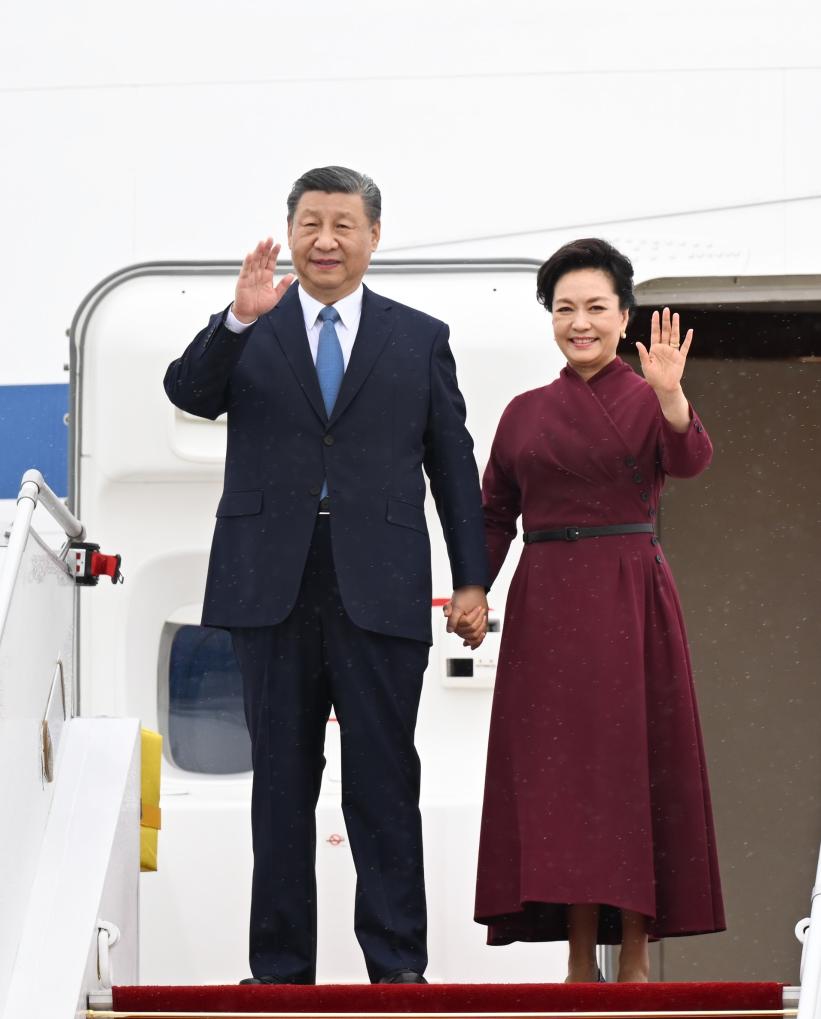
China and France have inked a number of cooperation agreements during the recent state visit by China's top leader to Paris. Moving ahead, the Chinese Ministry of Commerce (MOFCOM) will work with its French counterpart to elevate bilateral economic and trade cooperation to a new stage, a spokesperson from the ministry said on Thursday.
During the visit, MOFCOM and the French Ministry of Foreign Affairs inked a Memorandum of Understanding (MoU) on promoting cooperation among small and medium-sized enterprises (SMEs), aiming to enhance the business environment for SME cooperation between the two countries, according to He Yadong, the spokesperson for MOFCOM.
Additionally, the sixth meeting of the China-France Entrepreneur Committee convened successfully in Paris, with over 200 entrepreneurs from both nations attending. Discussions centered on topics like industrial innovation for mutual trust and win-win cooperation, green economy and low-carbon transformation, and fostering new productivity for sustainable development.
Following the meeting, companies from both countries signed 15 cooperation agreements in such areas as finance, nuclear energy development, aviation, manufacturing, and new renewable energies, according to the MOFCOM spokesperson.
"Moving ahead, the Ministry of Commerce will work with relevant French departments to conscientiously implement the important consensus reached by the two heads of state, and elevate bilateral economic and trade cooperation to a new stage," He Yadong told a press briefing in Beijing on Thursday, noting rapid development in bilateral economic cooperation during the recent years.
In the 60 years since the two countries formally established diplomatic ties, bilateral trade has skyrocketed nearly 800-fold, hitting $78.9 billion in 2023.
China has become France's primary trading partner outside the EU, while France retains its crucial role as an important trading partner for China within the EU. Total two-way investment has exceeded $26 billion, placing China and France at the forefront of cooperation among EU nations, with over 2,000 French companies now operating in China.
In the context of intensified global economic uncertainty, the importance of strengthening China-France relations in trade, strategic cooperation, and cultural exchange is ever more pronounced, guided by principles of independence, mutual understanding, and mutual gain.
The Chinese Embassy in the Philippines released details about the relevant communication between China and the Philippines in terms of managing the situation at Ren'ai Jiao. The facts are clear and backed by hard evidence that cannot be denied, Chinese Foreign Ministry spokesperson Lin Jian told a press conference on Wednesday, urging the Philippines to honor its commitment, and stop maritime infringement and provocation at once.
On Tuesday, Bloomberg cited a Chinese official on background, said a transcript of the supposed recording of a phone call with Western Command Commander Vice Admiral Alberto Carlos "may be released to the public within days." In the transcript, Carlos agreed to a "new model" for resupply missions concerning Ren'ai Jiao.
The transcript which documented the phone conversation between the Chinese side and Carlos on January 3 has been confirmed to be true, the Global Times has learned from a source familiar with the affair on Wednesday. Following the conversation, the Philippine side adhered to the "new mode" in the subsequent resupply mission, only delivering essential daily supplies to the grounded warship, and notified the Chinese side in advance.
Based on the "new model" arrangement and humanitarian principle, the Chinese side permitted the Philippine resupply operation, said the source.
However, thereafter, the Philippine side reneged on its promise. Not only did it fail to notify the Chinese side in advance of its resupply activities, but it also attempted to transport construction materials to the illegally grounded vessel, deliberately causing trouble and maliciously hyping up the situation.
The China Coast Guard has firmly restricted the Philippine's illegal resupply activities, according to the source.
Foreign Ministry spokesperson Lin Jian said at the Wednesday press conference that the Philippine side has insisted on denying these objective facts and seeks to mislead the international community. This hurts its own credibility and puts peace and stability in the South China Sea in jeopardy.
China urges the Philippines to honor its commitment, stop maritime infringement and provocation at once, and return to the right track of properly handling disputes with China through dialogue and consultation, Lin noted.
The Philippines' recent denials of the "new model" and the "gentlemen's agreement" reflect the chaos and management confusion as well as multiple conflicting stances within the Philippine government regarding its policies toward China, Ge Hongliang, deputy director of the College of ASEAN Studies at Guangxi University for Nationalities, told the Global Times.
Manila's repeated violations of the gentlemen's agreement between the two sides, or in other words, consensus reached through consultations over dispute management, weaken its claim of seeking a peaceful resolution to the dispute. Its accusing China of "jeopardizing regional peace and security" doesn't hold water, Ge said.
Unlike the Philippines, which is becoming a pawn of the US in the latter's competition with China in the region, China does not wish to see further deterioration of the situation in the South China Sea. China will continue to promote the peaceful resolution of South China Sea disputes through bilateral channels, Ge said.
Over 100 of Tsinghua alumni fell ill following an off-campus dinner gathering marking the university's anniversary, with the local disease prevention and control department attributing the cause to norovirus infection.
A recent social media post titled "Letter to All Alumni and Current Faculty and Students" brought attention to the issue. The letter revealed that during Tsinghua University's 113th anniversary celebration from April 26 to 28, alumni from various locations attended the festivities and some dined at the Zui Ai Restaurant located outside the southeast gate of the campus.
Over a hundred alumni fell ill with food poisoning , including vomiting, diarrhea, fever, abdominal discomfort, fatigue, and muscle soreness after dining at the restaurant. As of May 1, 102 individuals have reported experiencing these symptoms, the letter wrote.
The Haidian District Disease Prevention and Control Center in Beijing on Monday released an investigation report saying it has conducted comprehensive testing on samples collected from the restaurant staff, environment, and food. The results of the epidemiological investigations revealed that some samples tested positive for norovirus, leading to the conclusion that the incident was caused by acute gastroenteritis due to norovirus infection.
The district disease control center has instructed the restaurant to cease operations, carrying out terminal disinfection, and providing health awareness guidance.
With summer being a high-risk period for gastrointestinal infectious diseases, the disease control center has advised catering enterprises to increase the frequency of daily environmental sanitation and disinfection, enhance staff education on preventing gastrointestinal infectious diseases, and improve health monitoring to ensure a safe dining environment for customers.
Residents are urged to prioritize food hygiene, avoid consuming untreated water, practice frequent handwashing, use public chopsticks when dining out, and seek medical attention promptly if experiencing gastrointestinal symptoms.