An explosion occurred at a street-facing shop on Friday in northeast China's Liaoning Province, leaving two people dead and 13 others slightly injured, according to local fire authorities.
The blast, caused by a suspected liquefied gas cylinder leak, took place at 6:42 a.m. at the shop in a residential building in Benxi City. The shop covers about 35 square meters.
The injured have been sent to hospital for treatment. The cause of the accident is under investigation.
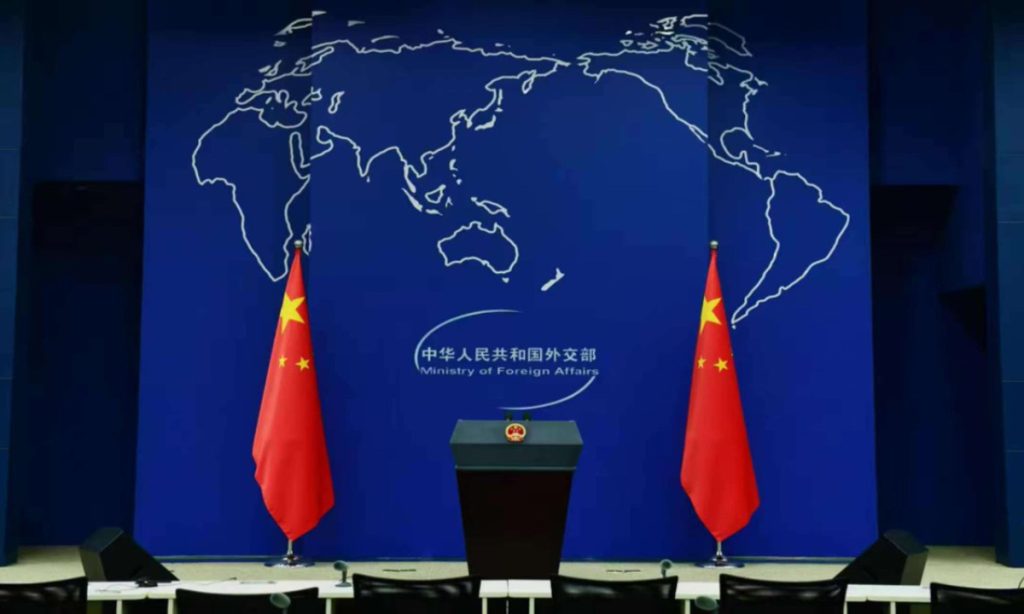
The US side has doubled down on its blockade and sanctions on Cuba, going so far as to add Cuban leaders to its sanction list. That once again reveals the US hegemonic and domineering behavior and bullying practices. China firmly opposes it, the Chinese Foreign Ministry spokesperson said on Friday in response to a question about US’ sanctions on Cuban President Miguel Diaz-Canel and some affiliated people and entities, including Diaz-Canel’s wife and stepson and Cuban leader Raúl Castro’s son and grandson.
A stable Cuba is what the international community wants to see, and any attempt from the US to destabilize Cuba will eventually backfire, the spokesperson said.
In response to the US’ sanctions, Cuban President Diaz-Canel said that these measures are aimed at reinforcing the blockade. Cuba will firmly stand against the imperial aggression. Cuban foreign ministry said that it is a ruthless act of economic aggression, and Washington could seek to use it as justification for more dangerous actions, including military aggression against Cuba.
We urge the US to immediately stop its blockade and any other forms of coercion and pressuring against Cuba, and stop infringing upon Cuban people’s right to survive and thrive. China will, as always, firmly support Cuba in safeguarding its national sovereignty and security and opposing external interference, the spokesperson added.
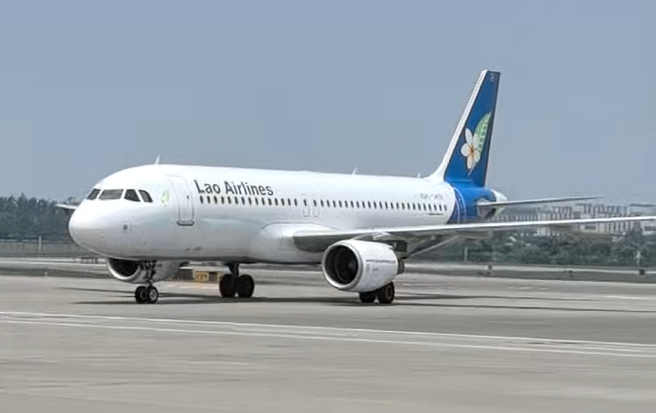
General Secretary of the Lao People's Revolutionary Party Central Committee and Lao President Thongloun Sisoulith arrived in Hangzhou, capital of east China's Zhejiang Province, on Tuesday for a five-day state visit.
Chinese President Xi Jinping and other Party and state leaders attended a ceremony to present flower baskets to fallen heroes at Tian'anmen Square in central Beijing on Monday.
Chinese President Xi Jinping on Sunday presented medals to recipients of the national medals and honorary titles, the highest state honors, ahead of the 75th founding anniversary of the People's Republic of China.
Xi, also general secretary of the Communist Party of China Central Committee and chairman of the Central Military Commission, conferred the highest state honors at the Great Hall of the People in Beijing.
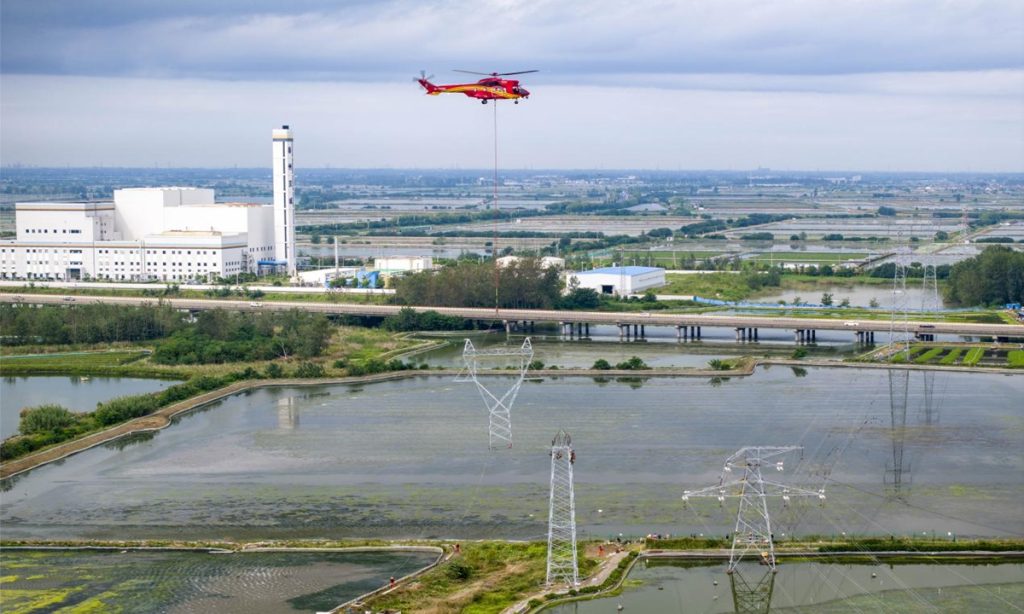
At 8:10 on September 24, State Grid Jiangsu Electric Power Company organized and completed a helicopter-assisted high-altitude segmented tower erection operation in Taizhou, Jiangsu Province. This marked the company's first use of a helicopter for tower erection.
Due to the surrounding crab ponds and extensive muddy road sections at the site where the iron tower needed to be installed, construction machinery such as cranes could not reach the designated repair location.
Additionally, the dense river network made it impossible to find suitable positions for temporary anchor lines to meet the construction angle requirements. To ensure the safe and efficient progress of the construction operations, the company's equipment department urgently applied to State Grid Electric Power Space Technology Co., Ltd. for helicopter support, using a helicopter to lift the tower head for emergency repair operations.
This helicopter-assisted tower erection operation was challenging, intensive, and demanding. Traditional helicopter-assisted iron tower erection only involves the overall lifting of lightweight towers. However, the weight of the iron tower to be installed exceeded the helicopter's load capacity, necessitating the adoption of a method where the lower section was assembled on the ground, followed by the helicopter lifting the tower head, and finally conducting an "aerial connection."
During the operation, the pilot swiftly flew the helicopter and stably hovered above Tower 84 of the 220kV Dutang 4947 line. Following the signals from the commander, the pilot slowly lowered the lifted tower head, while the ground personnel used traction ropes to guide the upper section into the temporary track, enabling the nearly 3-ton tower head to precisely connect with the tower body. After 30 minutes of "air-ground" collaborative operations, the new Tower 84 of the 220kV Dutang 4947 line was fully assembled.
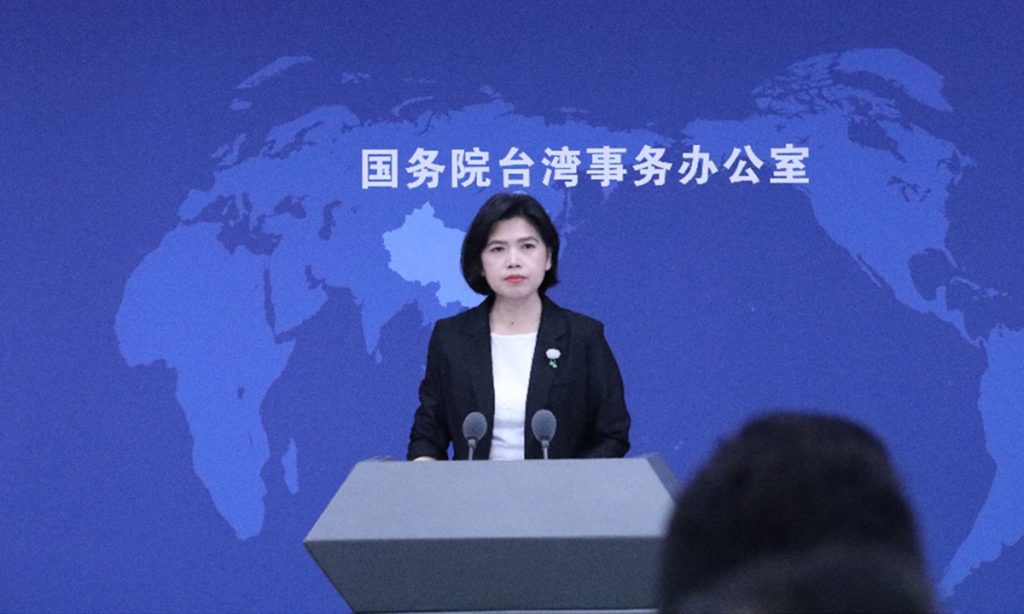
Taiwan's future lies in reunification and it can only be determined by over 1.4 billion Chinese people, including 23 million Taiwan compatriots, Zhu Fenglian, spokesperson of Taiwan Affairs Office of State Council, said on Wednesday, noting that Taiwan regional leader Lai Ching-te and the Democratic Progressive Party (DPP) authorities continue to seek "Taiwan independence" by relying on foreign forces, putting the Taiwan people in a risky situation of a potential conflict triggered by "Taiwan independence." Their moves seriously deviate from historical trend and are bound to fail.
Zhu's remarks were made in response to Lai's recent secessionist rhetoric and claim to strengthen Taiwan's "defense capabilities."
Lai's words once again exposed his stubborn "Taiwan independence" mentality, action to implement it and his malicious nature to continuously provoke confrontation. Taiwan's future lies in reunification and it can only be determined by over 1.4 billion Chinese people, including 23 million Taiwan compatriots, Zhu stressed at the press conference on Wednesday.
The spokesperson also noted that resolving the Taiwan question and achieving complete national reunification is the common aspiration of all Chinese people and a necessary requirement for the great rejuvenation of the Chinese nation.
"We would like to remind the DPP authorities: While unification is the trend, how can division last long? 'Taiwan independence' is a dead end and evil deeds will ultimately be punished," said Zhu.
Lai and the DPP's recent provocative actions aim to assert their political intention and consolidate support for their secessionist moves in the island while signaling to the US their commitment to "self-defense" in hopes of securing additional aid, Xin Qiang, director of the Taiwan Studies Center at Fudan University, told the Global Times on Wednesday.
As a "practical worker for Taiwan independence," Lai is fully aware that the island cannot confront the mainland by itself, Xin said, noting that Lai has to rely on external forces, especially the US, by actions including purchasing arms and strengthening military cooperation, meanwhile through hyping the island's so-called "self-defense' capability.
However, the US merely views Taiwan as a pawn to contain the mainland, analysts said. A recent report released by the US Department of Defense's Inspector General revealed that moldy armor and expired ammunition were among "unserviceable" US military equipment delivered to Taiwan recently and some of the 2.7 million rounds of poorly packaged ammunition were manufactured in 1983 and had expired, South China Morning Post reported.
The report once again shows a fact that the US prioritizes its own interests at all times, and a pawn can easily become a discarded piece — Taiwan will be no exception, the spokesperson said.
For the sake of their own interests in pursuing "Taiwan independence," the DPP authorities not only passively accept the junk [military] items of the US but also willingly serve as an "ATM machine" for the US, squandering the hard-earned money of the Taiwan people. This will not only fail to ensure the safety of the Taiwan people but will also push them toward the peril of war, said Zhu.
The DPP authorities' recent provocations have sparked criticism within the island. Some politicians were cited by Taiwan media as saying that Lai cannot indulge in short-term gains at the expense of the Taiwan people, and his remarks are sure to be met with reactions from the mainland. Some netizens also expressed their worries on escalating tensions across the Taiwan Straits.
The consulates general of Spain, Germany, the Netherlands, Luxembourg, and Poland in Shanghai and the European Union jointly launched the EU Jazz Month from September 6 to 29, creating good, healthy and happy vibes for music lovers.
Music bands, including Marco Mezquida - Tornado from Spain, Malstrom Live Concert from Germany, Fingerprint featuring Shirma Rouse from the Netherlands, Greg Lamy Trio from Luxembourg and Zk Collaboration from Poland, are in the spotlight over the month of September.
From September 6 to 7, Spanish jazz pianist Marco Mezquida, along with his musical partners, bassist Masa Kamaguchi and drummer Ramon Prats, offered a wonderful rendition of the album "Tornado."
On September 8, German Malstrom Live Concert was staged as part of the EU Jazz Month.
Based on jazz, their music blended contemporary influences such as free improvisation, metal, rock, and electronica, with a strong sensory impact and ferocious performance.
Rahmat Allah Mohamed Osman, the permanent representative of the African Union (AU) to China, highlighted in a recent interview with Global Times that the 2024 Summit of the Forum on China-Africa Cooperation (FOCAC) that just concluded in Beijing is significant for China-Africa relations. He believes that China and Africa have mutually beneficial needs, and expresses hopes for the implementation of more policies in China's support in agriculture, industry, and talent development to Africa.
The AU is the first regional international organization to sign a cooperation plan with China-proposed Belt and Road Initiative (BRI) and establish a working coordination mechanism. In Osman's view, China-Africa cooperation can effectively promote the realization of Africa's development blueprint "Agenda 2063" and accelerate industrialization in Africa.
In 2018, the AU established a representative office in China, with Osman, as the first AU permanent representative to China, having witnessed the upgrading of China-Africa relations. In 2023, China launched the Initiative on Supporting Africa's Industrialization, and implemented the Plan for China Supporting Africa's Agricultural Modernization and the Plan for China-Africa Cooperation on Talent Development under the framework of the FOCAC to support Africa's development and prosperity with concrete steps.
According to Osman, these initiatives cover areas that are urgently needed for Africa's modernization efforts and will help African countries enhance their development capabilities.
Industrialization is the necessary path for the African continent to achieve development and is an important cornerstone for Africa's prosperity and strength. Osman believes that deepening cooperation between Africa and China will strongly promote the realization of the AU's Agenda 2063 and accelerate the industrialization process in Africa.
African countries have a significant demographic advantage, with a high proportion of young people, and cooperation between Africa and China in talent development will help to unleash the demographic dividend of African nations, he said.
Osman noted that China and Africa are making progress to heighten trade, with Kenyan flowers and avocados already making their way into the Chinese market, and Ethiopian and Rwandan coffee being enjoyed by Chinese consumers. He believes that trade between China and African countries still has great potential for growth.
The envoy criticized the Western narrative of China engaging in neo-colonialism in Africa. He stated that African countries share many common concerns with China, which has always listened to Africa's voice and provided steadfast support. Historically, Western colonizers plundered Africa's resources and showed indifference to local construction and development in Africa.
"This [narrative of China engaging in neo-colonialism in Africa] is ridiculous and it's not acceptable for us at all," the envoy told the Global Times.
In the harsh, oxygen-thin environment of the Xizang Autonomous Region in Southwest China, where life on the "roof of the world" meets daily challenges, the resilience and unity of the Chinese people have been tested and proven over the last three decades.
Since 1994, approximately 12,000 officials have been dispatched to Xizang through the paired-up assistance mechanism. Among them, Party members have formed the backbone of this mission, which has been sustained across generations.
They are comprised of doctors who brave the cold and lack of oxygen to bring health and hope to remote villages; teachers who cross mountains and rivers to impart knowledge and ignite the dreams of children; engineers who carve roads through treacherous terrain, connecting isolated communities to the broader world; and officials who leave their homes and families behind to dedicate themselves to the development of Xizang, embodying the spirit of perseverance and dedication.
As 2024 marks the 30th anniversary of these dedicated efforts in aiding Xizang, the Global Times has interviewed aid teams from across the region to delve into their inspiring stories.
Long-lasting spirit
Li Manwan has never regretted her decision.
A doctor from Changde, Central China's Hunan Province, Li first arrived at the Lhunze County People's Hospital in Shannan Prefecture, southeastern Xizang in August 2021. After completing her initial year-and-a-half aid mission in Xizang, she applied to join the second batch of medical workers in March 2023, continuing her service in Lhunze to fulfill her medical mission.
Lhunze sits at an average altitude of 3,800 meters and is known for its harsh, windy conditions. Initially, Li overcame the discomfort caused by altitude sickness and took full responsibility for clinical teaching, outpatient services, and surgeries in the hospital's obstetrics and gynecology department.
Within just two years, the obstetrics and gynecology department developed into a comprehensive clinical unit, integrating gynecology, obstetrics, family planning, and health care, with the capability of handling emergency care for pregnant women and newborns.
Li has excelled not only in improving medical techniques, but also in team building.
Over the last three years, Li has also led her team to complete free screenings for the "two cancers" across all 11 townships in the county, serving a total of 1,066 people.
"Lhunze is my second home, and the obstetrics and gynecology department is like a child I have nurtured. I want to continue guiding it forward," Li told the Global Times.
In northern Xizang, a hospital located at an altitude of 4,500 meters has become a shelter for the local people, granting them access to guaranteed medical services.
The Nagqu People's Hospital faced challenges such as its remote location and harsh climate, as well as trouble attracting and retaining highly skilled medical professionals. Nagqu is also the highest-altitude prefecture-level city in the country, with the harshest environmental conditions for local residents. The average elevation in the city is 4,500 meters, and the oxygen content in the air during the summer is only 58 percent of that at sea level. The annual average temperature ranges from -0.9 C to -3.3 C.
Since 2015, Liaoning Province has dispatched a total of 116 experts to assist Xizang, providing strong support for the high-quality development of medical services in Nagqu. Additionally, Liaoning Province has invested over 20 million yuan ($2.7 million) in the purchase of equipment such as magnetic resonance imaging and telemedicine platforms to aid in the hospital's development, the Global Times learned from local government.
Currently, critical care units for maternal and child health, pediatric critical care, a high-altitude medical research center, and emergency rescue ave all been established.
"In the past, women from local herding communities did not have the habit of giving birth in hospitals, but now people are more willing to come to the hospital because it is safer, more reliable, and more hygienic. People also have more faith in the hospital," Zhao Yi, director of the obstetrics and gynecology department at the Nagqu People's Hospital, who comes from Liaoning, told the Global Times. Better life, better future
Some of China's most economically developed regions are also bringing their advanced experiences, skills, and concepts in development to the most remote areas of Xizang.
Medog county, the last county in China to be connected to the national road system, is nestled deep in the southeastern Himalayas. The roaring Yarlung Zangbo River makes a dramatic turn at the Guoguotang Bend, creating abundant hydropower resources in the area.
Standing at the iconic Guoguotang viewing platform, one can look down at a beautiful tea plantation, shaped like a horseshoe, imprinted on the nearby hillside, blending in with the majestic Yarlung Zangbo River Valley.
Today, tea has become the "golden leaf" that enriches the lives of the people of Medog.
Since the first tea bush was planted in a trial in 2015, Medog's tea gardens have spread across the high mountains and deep valleys. During the tea-picking season, farmers are seen constantly moving about, and the fragrance of tea fills the plateau air.
The county has now established 103 high-altitude organic tea gardens, with a total tea plantation area of 19,000 mu (approximately 1,267 hectares). Currently, there are six tea processing enterprises, and in 2023, 5.25 million kilograms of fresh tea leaves were harvested, increasing the income of the local people by 5.13 million yuan ($700,000), according to the Medog government.
This success is a result of aid efforts from Foshan, South China's Guangdong Province. Since 2013, Foshan has sent four groups of 189 officials and professionals to aid Xizang, investing 570 million yuan ($80 million) in aid funds, and completing 89 construction projects. Additionally, they provided 77 million yuan in extra-budgetary funds for five more projects, contributing significantly to the tremendous changes in Medog since the opening of the Medog Highway 10 years ago.
With a decade of infrastructure development and tourism promotion, Medog has now become one of the most popular tourist destinations in Xizang. In 2023, the county welcomed 42,000 tourists, generating over 200 million yuan in revenue, the Global Times learned from Medog publicity department.
Similarly, Yadong county, also located on the border, has benefited from the development of tourism brought about by aid teams.
Pangda village is a model well-off border village supported by Shanghai's aid. Thanks to this support, 99 households with nearly 500 residents relocated from a village at an altitude of 4,630 meters to Pangda at around 2,000 meters, where they have started a new life.
In addition to economic development, Shanghai has also brought advanced educational resources to Yadong.
In recent years, Putuo district's education system has dispatched numerous outstanding officials and teachers to Xizang.
These educators have embedded Shanghai's advanced teaching concepts and methods into the schools they assist, engaging in deep exchanges with local teachers, growing together, and becoming "golden seeds" that foster the reform and development of local education. Lasting legacy
Among the many pairing-up assistance programs for Xizang, the artistic support efforts of a talent team from East China's Fujian Province are also impressive.
Thangka, a scroll painting framed with colored satin, is the most representative folk religious art form of the Tibetan ethnic group. Lacquer painting is a traditional painting form that uses natural lacquer as the main material. Fujian lacquer painting is one of the important lacquer painting schools in China. Under the efforts of the Fujian Aid-Xizang Work Team, they merged to produce a new art form - Thangka lacquer painting.
Since 2018, the Fujian Provincial Museum of Art has explored innovative art poverty alleviation models and has successively sent professional personnel and local lacquer artists to hold nine Thangka painting training sessions in Qamdo, eastern Xizang, and Fujian, teaching over 160 Thangka painters the art of lacquer painting and creating more than 300 Thangka lacquer painting works.
"The technique of Fuzhou bodiless lacquerware and Thangka art are both listed as the first batch of national intangible heritage. Through paired support, these two ancient and locally distinctive art forms have achieved organic integration," Yu Zheng, a representative inheritor of Fuzhou bodiless lacquerware technique, told the Global Times.
Yu went to Qamdo in August 2023 for a month-long course on Thangka painting techniques.
"When we came to Qamdo, the collision of these two art forms brought about an expansion of the local Thangka painters' creativity, ushering these Tibetan artists to a broader stage," said Yu.
In 2019, Thangka lacquer painting works made their international debut at the second China International Import Expo. Since then, these art pieces have appeared at important international cultural exchange platforms such as the Cross-Strait Cultural Industry Expo and the China International Copyright Expo.
In June 2020, nearly 400,000 netizens watched the process of creating Thangka lacquer paintings streamed online.
Fujian has several active lacquer art creation and operation groups in China. These professional technicians and lacquer artists have conducted Thangka lacquer painting training in Xizang, helping local Tibetan artists boost the visibility and sales of their artworks through the fusion of painting techniques, bringing them more income, Yu said.
In 2022, under the guidance of the Fujian talent team, the Qamdo Vocational and Technical College established a major in lacquer painting to cultivate composite talents in this kind of painting.
Yu emphasized that the training of Thangka lacquer painting techniques offers not only technical skills and cultural preservation, but also a mutually beneficial cultural exchange and a deep emotional connection between people from different places. This vibrant artistic innovation continues to attract more and more people.