NEW ORLEANS — The New Horizons team may get more than it bargained for with its next target. Currently known as 2014 MU69, the object might, in fact, be two rocks orbiting each other — and those rocks may themselves host a small moon.
MU69 orbits the sun in the Kuiper Belt, a region more than 6.5 billion kilometers from Earth. That distance makes it difficult to get pictures of the object directly. But last summer, scientists positioned telescopes around the globe to catch sight of MU69’s shadow as it passed in front of a distant background star (SN Online: 7/20/17), a cosmic coincidence known as an occultation. Analyzing that flickering starlight raised the idea that MU69 might have two lobes, like a peanut, or might even be a pair of distinct objects. Whatever its shape, MU69 is not spherical and may not be alone, team members reported in a news conference on December 12 at the fall meeting of the American Geophysical Union.
Another stellar flicker sighting raised the prospect of a moon. On July 10, NASA’s airborne Stratospheric Observatory for Infrared Astronomy observed MU69 pass in front of a different star (SN: 3/19/16, p. 4). SOFIA saw what looked like a new, shorter dip in the star’s light. Comparing that data with orbit calculations from the European Space Agency’s Gaia spacecraft suggested that the blip could be another object around MU69.
A double object with a smaller moon could explain why MU69 sometimes shifts its position from where scientists expect it to be during occultations, said New Horizons team member Marc Buie of the Southwest Research Institute in Boulder, Colo.
The true shape will soon be revealed. The New Horizons spacecraft set its sights on the small space rock after flying past Pluto in 2015, and will fly past MU69 on January 1, 2019.
Our solar system is no longer the sole record-holder for most known planets circling a star.
An artificial intelligence algorithm sifted through data from the planet-hunting Kepler space telescope and discovered a previously overlooked planet orbiting Kepler 90 — making it the first star besides the sun known to host eight planets. This finding, announced in a NASA teleconference December 14, shows that the kinds of clever computer codes used to translate text and recognize voices can also help discover strange new worlds. The discovery, also reported in a paper accepted to the Astronomical Journal, can also help astronomers better understand the planetary population of our galaxy. “Finding systems like this that have lots of planets is a really neat way to test theories of planet formation and evolution,” says Jeff Coughlin, an astronomer at the SETI Institute in Mountain View, Calif., and NASA’s Ames Research Center in Moffett Field, Calif.
Kepler 90 is a sunlike star about 2,500 light-years from Earth in the constellation Draco. The latest addition to Kepler 90’s planetary family is a rocky planet about 30 percent larger than Earth called Kepler 90i. It, too, is the third planet from its sun — but with an estimated surface temperature higher than 400° Celsius, it’s probably not habitable.
Story continues below graphic The seven previously known planets in this system range from small, rocky worlds like Kepler 90i to gas giants, which are all packed closer to their star than Earth is to the sun. “It’s very possible that Kepler 90 has even more planets,” study coauthor Andrew Vanderburg, an astronomer at the University of Texas at Austin, said in the teleconference. “There’s a lot of unexplored real estate in the Kepler 90 system.” Astronomers have identified over 2,300 new planets in Kepler data by searching for tiny dips in a star’s brightness when a planet passes in front of it. Kepler has collected too much data for anyone to go through it all by hand, so humans or computer programs typically only verify the most promising signals of the bunch. That means that worlds that produce weaker light dips — like Kepler 90i — can get passed over. Vanderburg and Christopher Shallue, a software engineer at Google in Mountain View, Calif., designed a computer code called a neural network, which mimics the way the human brain processes information, to seek out such overlooked exoplanets. Researchers previously automated Kepler data analysis by hard-coding programs with rules about how to detect bona fide exoplanet signals, Coughlin explains. Here, Vanderburg and Shallue provided their code with more than 10,000 Kepler signals that had been labeled by human scientists as either exoplanet or non-exoplanet signals. By studying these examples, the neural network learned on its own what the light signal of an exoplanet looked like, and could then pick out the signatures of exoplanets in previously unseen signals.
The fully trained neural network examined 670 star systems known to host multiple planets to see whether previous searches had missed anything. It spotted Kepler 90i, as well as a sixth, Earth-sized planet around the star Kepler 80. This feat marks the first time a neural network program has successfully identified new exoplanets in Kepler data, Jessie Dotson, an astrophysicist at NASA’s Ames Research Center said at the teleconference.
Vanderburg and Shallue now plan to apply their neural network to Kepler’s full cache of data on more than 150,000 stars, to see what other unrecognized exoplanets it might turn up.
Coughlin is also excited about the prospect of using artificial intelligence to assess data from future exoplanet search missions, like NASA’s TESS satellite set to launch next year. “The hits are going to keep on coming,” regarding potential exoplanet signals, he says. Having self-taught computer programs help humans slog through the data could significantly speed up the rate of scientific discovery.
Globs of an inflammation protein beckon an Alzheimer’s protein and cause it to accumulate in the brain, a study in mice finds. The results, described in the Dec. 21/28 Nature, add new details to the relationship between brain inflammation and Alzheimer’s disease.
Researchers suspect that this inflammatory cycle is an early step in the disease, which raises the prospect of being able to prevent the buildup of amyloid-beta, the sticky protein found in brains of people with Alzheimer’s disease. “It is a provocative paper,” says immunologist Marco Colonna of Washington University School of Medicine in St. Louis. Finding an inflammatory protein that can prompt A-beta to clump around it is “a big deal,” he says.
Researchers led by Michael Heneka of the University of Bonn in Germany started by studying specks made of a protein called ASC that’s produced as part of the inflammatory response. (A-beta itself is known to kick-start this inflammatory process.) Despite being called specks, these are large globs of protein that are created by and then ejected from brain immune cells called microglia when inflammation sets in. A-beta then accumulates around these ejected ASC specks in the space between cells, Haneke and colleagues now propose. A-beta can directly latch on to ASC specks, experiments in lab dishes revealed. The two proteins were also caught in close contact in brain tissue taken from people with Alzheimer’s disease. Researchers didn’t see any ASC specks mingling with A-beta in the brains of people without the disease. Mice engineered to produce lots of A-beta had telltale signs of its accumulation in their brains at 8 and 12 months of age, roughly comparable to middle age in people. But in mice that also lacked the ability to produce ASC specks, this A-beta brain load was much lighter, and these mice performed better on a memory test. Similar reductions in A-beta loads came when researchers used an antibody to prevent A-beta from sticking to ASC specks, results that suggest the specks are needed for A-beta to clump up.
The details show “a quite new and specific mechanism” that’s worth exploring for potential treatments, says Richard Ransohoff, a neuroinflammation biologist at Third Rock Ventures, a venture capital firm in Boston.
To be effective as a treatment, an antibody like the one in the study that kept A-beta from sticking to ASC would need to be able to enter the brain and persist at high levels — a big challenge, Ransohoff says. Still, the results are promising, he says. “I like the data. I like the line of experimentation.”
Many questions remain. The results are mainly from mice, and it’s not clear whether ASC specks and A-beta have similar interactions in human brains. Nor is it obvious how to stop the A-beta from accumulating around the specks without affecting the immune system more generally.
What’s more, the role of the microglia immune cells that release ASC specks is complex, Colonna says. In some cases, microglia serve as brain protectors by surrounding and sequestering sticky A-beta plaques in the brain (SN: 11/30/13, p. 22). But the current results suggest that by releasing ASC specks, the same cells can also make A-beta accumulation worse. The dueling roles of the cells — protective in some cases and potentially harmful in others — make it challenging to figure out how to tweak their behavior therapeutically, Colonna says.
A new version of the periodic table showcases the predicted properties of 2-D metals, an obscure class of synthetic materials.
Arrayed in 1-atom-thick sheets, most of these 2-D metals have yet to be seen in the real world. So Janne Nevalaita and Pekka Koskinen, physicists at the University of Jyväskylä in Finland, simulated 2-D materials of 45 metallic elements, ranging from lithium to bismuth. For each sheet, the researchers measured the average chemical bond length, bond strength and the material’s compressibility, how difficult it is to squeeze the atoms closer together. The team then charted those features in the new periodic table. The new work, described in the Jan. 15 Physical Review B, could help researchers identify which 2-D metals are most promising for various applications, like spurring chemical reactions or sensing gases.
These metals are similar to previously studied 2-D materials, such as the supermaterial graphene (SN: 10/3/15, p. 7) and its cousin diamondene (SN: 9/2/17, p. 12). But whereas those materials were made up of covalent bonds — in which pairs of atoms share electrons — these 2-D metals are composed of metallic bonds, where electrons flow more freely among atoms. “It’s a whole new type of family of nanostructures,” Koskinen says. “Sky’s the limit, for what the applications could be.”
Like other superflat materials, some potential 2-D metals might exhibit exotic quantum qualities, such as 2-D magnetism or superconductivity, the ability to transmit electricity without resistance. Such properties may make those materials useful for quantum computing, says Joshua Robinson, a materials scientist at Penn State not involved in the work.
Nevalaita and Koskinen created three periodic tables that chart the properties of 2-D metals with atoms in triangular, square or honeycomb configurations. Using their trio of tables, the researchers discovered that the properties of 2-D metals were related to those of their 3-D counterparts. For instance, atoms of any given metal arranged in a triangular lattice typically had about 70 percent the bond strength of atoms in the 3-D version of that metal. Square and honeycomb lattices generally showed about 66 percent and 54 percent the bond strength of 3-D metals, respectively. The periodic tables revealed similar relationships between 2-D and 3-D metals in bond length and compressibility. These findings could allow researchers to get a quick profile of a 2-D metal that has never been created in the lab or in a computer simulation, just based on the well-known characteristics of its 3-D analog.
Nevalaita and Koskinen also compared the stability of 2-D metals whose atoms were arranged in the three different configurations. The researchers found that many 2-D metals were stable in triangular and honeycomb patterns, but not in squares. Future computer simulations could examine the electric and magnetic properties of these materials, Koskinen says. Knowing the stability and property profiles of 2-D metals could inform which materials scientists fabricate in the lab.
“This is the tip of the iceberg in the area of 2-D metals,” says Mauricio Terrones, a chemical physicist at Penn State not involved in the work.
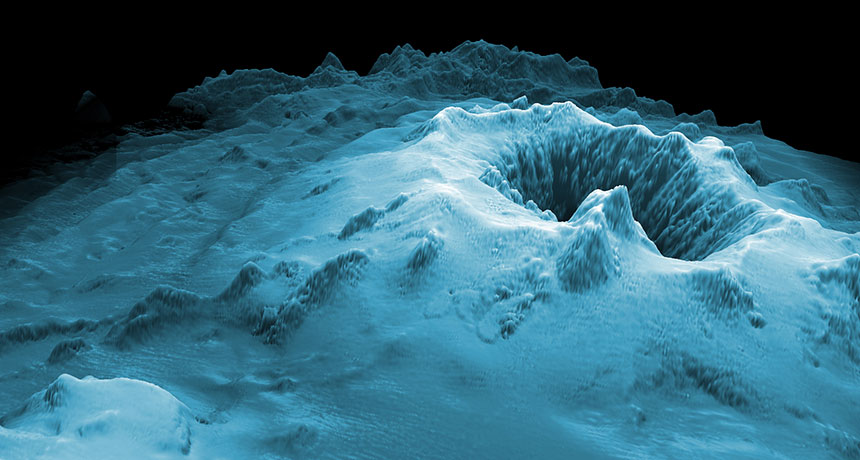
On July 31, 2012, Maggie de Grauw looked out the window of her flight back to New Zealand after a holiday in Samoa and glimpsed a mysterious mass floating below. That mass turned out to be a raft of lightweight pumice rock, the product of an erupting underwater volcano called Havre. The 2012 eruption turned out to be the largest of its kind in the last 100 years. And now, the pumice raft has become a crucial clue in revealing the eruption’s surprisingly complex nature. Although underwater eruptions happen all the time, scientists have only recorded such events since the 1990s, and pumice rafts can often float under the radar. Typically, researchers use depth sensors aboard ships to examine the crime scene of an underwater eruption.
But “what we found on the seafloor was almost entirely different from what we expected,” says Rebecca Carey, a volcanologist at the University of Tasmania in Australia. Havre challenges the reliability of the geologic record when it comes to big deep-sea eruptions.
In 2015, Carey and her colleagues set out to get a more detailed view of Havre’s big outburst than what ship-based sensors could reveal. The researchers deployed a robot to measure the depth of the 4-kilometer-wide caldera. Another robot, operated remotely from a ship, allowed the team to get a closer look at specific features in and around the caldera, and to take rock and water samples. A bit of satellite-image detective work revealed the size and path of the pumice raft, which formed no more than 21 1/2 hours after the eruption ended.
The robotic diving duo provided a high-resolution topographic map of the underwater posteruption landscape. The map shows a massive rupture, lava from 14 different vents ranging from 900 to 1,220 meters below the surface, chunks of pumice, landslide deposits and a blanket of ash. This diversity of volcanic material was unexpected, the researchers write January 10 in Science Advances. Although the Havre event was larger than the 1980 eruption of Mount St. Helens, a similar type of volcano that shot a huge column of debris into the air, the seafloor data weren’t indicative of such a large eruption. “When you shoot a lot of material up into water, there’s resistance,” Carey says. “So you expect to see a lot of it deposited on the seafloor.” But using an old seafloor map of Havre and satellite data, Carey and her colleagues calculated that more than 75 percent of the material produced by Havre ended up in the 400-square-kilometer pumice raft. That raft eventually broke apart and washed up on Australian and other South Pacific beaches. Volcanic gases might have pushed debris to the surface, Carey speculates, but it’s impossible to pinpoint a cause.
Many submarine eruptions go unnoticed, and few have been mapped in this manner. Frequently, researchers rely only on clues on the seafloor surface to determine an eruption’s size. And, if Carey’s team had just done that, the researchers would have never known the true size and nature of the eruption.
“That is a real eye-opener from this study,” says Bill Chadwick, a volcanologist at the National Oceanic and Atmospheric Administration’s Pacific Marine Environmental Laboratory in Newport, Ore. “What they found tells us a lot about how submarine eruptions behave differently than those on land.”
And if the Havre data are any guide, previous estimates of underwater eruption size may be off. “Now we know that the geological rock record is unfaithful to these very large magnitude powerful events,” Carey says.
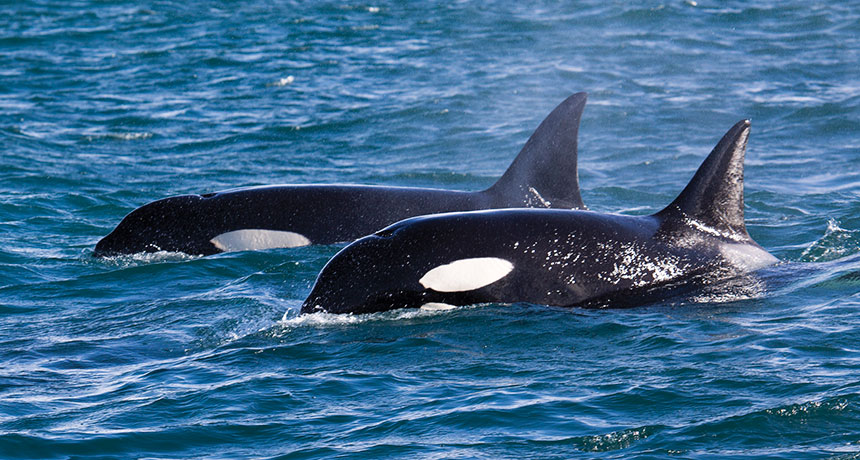
Ready for sketch comedy she’s not. But a 14-year-old killer whale named Wikie has shown promise in mimicking strange sounds, such as a human “hello” — plus some rude noises.
Scientists recorded Wikie at her home in Marineland Aquarium in Antibes, France, imitating another killer whale’s loud “raspberry” sounds, as well as a trumpeting elephant and humans saying such words as “one, two, three.”
The orca’s efforts were overall “recognizable” as attempted copies, comparative psychologist José Zamorano Abramson of Complutense University of Madrid and colleagues report January 31 in Proceedings of the Royal Society B. Just how close Wikie’s imitations come to the originals depends on whether you’re emphasizing the rhythm or other aspects of sound, Abramson says.
Six people judged Wikie’s mimicry ability, and a computer program also rated her skills. She did better at some sounds, like blowing raspberries and saying “hello-hello,” than others, including saying “bye-bye.” Imitating human speech is especially challenging for killer whales. Instead of vocalizing by passing air through their throats, they sound off by forcing air through passageways in the upper parts of their heads. It’s “like speaking with the nose,” Abramson says.
The research supports the idea that imitation plays a role in how killer whales develop their elaborate dialects of bleating pulses. Cetaceans are rare among mammals in that, like humans, they learn how to make the sounds their species uses to communicate.
When it comes to the dimensions of spacetime, what you see may be what you get.
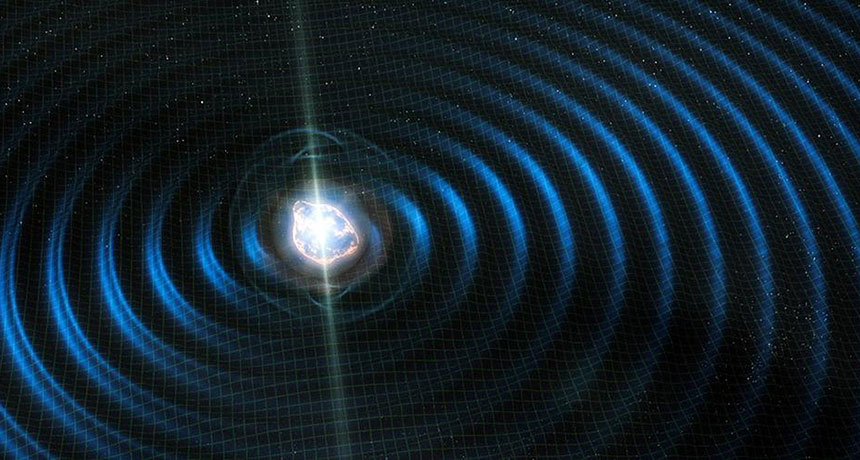
Using observations from the collision of two neutron stars that made headlines in 2017 (SN: 11/11/17, p. 6), scientists found no evidence of gravity leaking into hidden dimensions. The number of observed large spatial dimensions — kilometer-scale or bigger — is still limited to the three we know and love, the researchers report January 24 at arXiv.org.
Just as insects floating on a pond may be unaware of what’s above or below the water’s surface, our 3-D world might be part of a higher-dimensional universe that we can’t directly observe. However, says astrophysicist David Spergel of Princeton University, a coauthor of the new study, “gravity might be able to explore those other dimensions.” Such extra dimensions might explain some conundrums in physics, such as the existence of dark matter (an as-yet-unidentified source of mass in the universe) and dark energy (which causes the universe’s expansion rate to accelerate), says coauthor Daniel Holz, an astrophysicist at the University of Chicago. “That’s why people get excited about these modifications.”
To look for any hint of leaking gravity, scientists turned to the light and gravitational waves emitted in the neutron star smashup detected on August 17, 2017. The light allowed scientists to find the galaxy where the neutron stars merged. Spergel, Holz and colleagues showed that, given the galaxy’s distance from Earth, the strength of the gravitational waves was as expected. Extra dimensions weren’t stealing, and thus weakening, the observed ripples.
A variety of theories predict extra dimensions of spacetime into which gravity could leak, but the new result applies only to large extra dimensions, Spergel says. That’s because the gravitational waves detected from the neutron star collision have wavelengths of thousands of kilometers. Tiny extra dimensions, smaller than a fraction of a millimeter across, have also been proposed, but they wouldn’t affect such extended ripples. One theory, proposed in 2000 by a group of theoretical physicists including Georgi Dvali, predicts a type of large extra dimension. The effects of gravity leaking into such dimensions would be visible only over long distances — explaining why gravity on smaller scales, such as the size of the solar system, behaves as if there are three spatial dimensions.
Because the gravitational waves don’t seem to weaken on their trek to Earth, they must travel more than about 65 million light-years before leaking into any potential additional dimension, the researchers concluded in the new study.
But other theories of extra dimensions are unaffected by the result. String theory, which posits that particles are made up of infinitesimal vibrating strings, predicts tiny extra dimensions that are curled up on themselves. “We’re not in any way ruling out string theory,” Spergel says. Another variety of extra spacetime dimension, of potentially infinite size, was proposed by physicists Lisa Randall and Raman Sundrum in 1999 (SN: 9/26/09, p. 22). But such theories also would not be ruled out, because gravity can’t penetrate very far into that type of extra dimension.
Neutron star mergers are “a completely new laboratory of testing gravity,” says Dvali, of Ludwig-Maximilians-Universität in Munich, who was not involved with the research. “This is absolutely fascinating and fantastic.” But, Dvali notes, the type of extra dimension he proposed back in 2000 already seems unlikely on these scales. “I would say there is already an extremely strong constraint on leakage coming from cosmology.” No matter how far we peer out into space, the universe seems to follow the normal laws of gravity in three dimensions.
For now, the dimensions of space remain as simple as 1, 2, 3.
Scientists disagree over why cracking your knuckles makes noise. Now, a new mathematical explanation suggests the sound results from the partial collapse of tiny gas bubbles in the joints’ fluid.
Most explanations of knuckle noise involve bubbles, which form under the low pressures induced by finger manipulations that separate the joint. While some studies pinpoint a bubble’s implosion as the sound’s source, a paper in 2015 showed that the bubbles don’t fully implode. Instead, they persist in the joints up to 20 minutes after cracking, suggesting it’s not the bubble’s collapse that creates noise, but its formation (SN: 5/16/15, p. 16). But it wasn’t clear how a bubble’s debut could make sounds that are audible across a room. So two engineers from Stanford University and École Polytechnique in Palaiseau, France, took another crack at solving the mystery.
The sound may come from bubbles that collapse only partway, the two researchers report March 29 in Scientific Reports. A mathematical simulation of a partial bubble collapse explained both the dominant frequency of the sound and its volume. That finding would also explain why bubbles have been observed sticking around in the fluid.
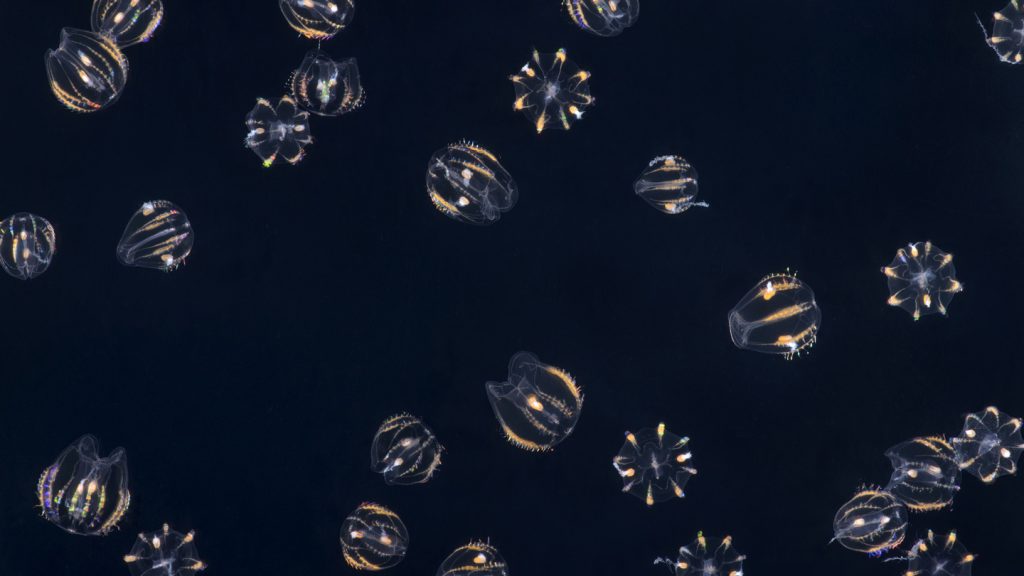
Shimmering, gelatinous comb jellies wouldn’t appear to have much to hide. But their mostly see-through bodies cloak a nervous system unlike that of any other known animal, researchers report in the April 21 Science.
In the nervous systems of everything from anemones to aardvarks, electrical impulses pass between nerve cells, allowing for signals to move from one cell to the next. But the ctenophores’ cobweb of neurons, called a nerve net, is missing these distinct connection spots, or synapses. Instead, the nerve net is fused together, with long, stringy neurons sharing a cell membrane, a new 3-D map of its structure shows. While the nerve net has been described before, no one had generated a high-resolution, detailed picture of it.
It’s possible the bizarre tissue represents a second, independent evolutionary origin of a nervous system, say Pawel Burkhardt, a comparative neurobiologist at the University of Bergen in Norway, and colleagues.
Superficially similar to jellyfish, ctenophores are often called comb jellies because they swim using rows of beating, hairlike combs. The enigmatic phylum is considered one of the earliest to branch off the animal tree of life. So ctenophores’ possession of a simple nervous system has been of particular interest to scientists interested in how such systems evolved.
Previous genetics research had hinted at the strangeness of the ctenophore nervous system. For instance, a 2018 study couldn’t find a cell type in ctenophores with a genetic signature that corresponded to recognizable neurons, Burkhardt says.
Burkhardt, along with neurobiologist Maike Kittelmann of Oxford Brookes University in England and colleagues, examined young sea walnuts (Mnemiopsis leidyi) using electron microscopes, compiling many images to reconstruct the entire net structure. Their 3-D map of a 1-day-old sea walnut revealed the funky synapse-free fusion between the five sprawling neurons that made up the tiny ctenophore’s net. The conventional view is that neurons and the rest of the nervous system evolved once in animal evolutionary history. But given this “unique architecture” and ctenophores’ ancient position in the animal kingdom, it raises the possibility that nerve cells actually evolved twice, Burkhardt says. “I think that’s exciting.”
But he adds that further work — especially on the development of these neurons — is needed to help verify their evolutionary origin.
The origins of the animal nervous system is a murky area of research. Sponges — the traditional competitors for the title of most ancient animal — don’t have a nervous system, or muscles or fundamental vision proteins called opsins, for that matter. But there’s been mounting evidence to suggest that ctenophores are actually the most ancient animal group, older even than sponges (SN: 12/12/13).
If ctenophores arose first, it “implies that either sponges have lost a massive number of features, or that the ctenophores effectively evolved them all independently,” says Graham Budd, a paleobiologist at Uppsala University in Sweden who was not involved in the research.
If sponges emerged first, it’s still possible that ctenophores evolved their nerve net independently rather than inheriting it from a neuron-bearing ancestor, Burkhardt says. Ctenophores have other neurons outside the nerve net, such as mesogleal neurons embedded in a ctenophore’s gelatinous body layer and sensory cells, the latter of which may communicate with the nerve net to adjust the beating of the combs. So, it’s possible they’re a mosaic of two nervous systems of differing evolutionary origins.
But Joseph Ryan, a bioinformatician at the University of Florida in Gainesville, doesn’t think the results necessarily point to the parallel evolution of a nervous system. Given how long ctenophores have been around — especially if they are older than sponges — the ancestral nervous system may have had plenty of time to evolve into something weird and highly-specialized, says Ryan, who was not part of the study. “We’re dealing with close to a billion years of evolution. We’re going to expect strange things to happen.”
The findings are “one more bit of the jigsaw puzzle,” Budd says. “There’s a whole bunch we don’t know about these rather common and rather well-known animals.”
For instance, it’s unclear how the nerve net works. Our neurons use rapid changes in voltage across their cell membranes to send signals, but the nerve net might work quite differently, Burkhardt says.
There are reports of potentially similar systems in other animals, such as by-the-wind-sailor jellies (Velella velella). Studying them in detail, along with nerve nets in other ctenophore species, could determine just how unusual this synapse-less nervous system is.
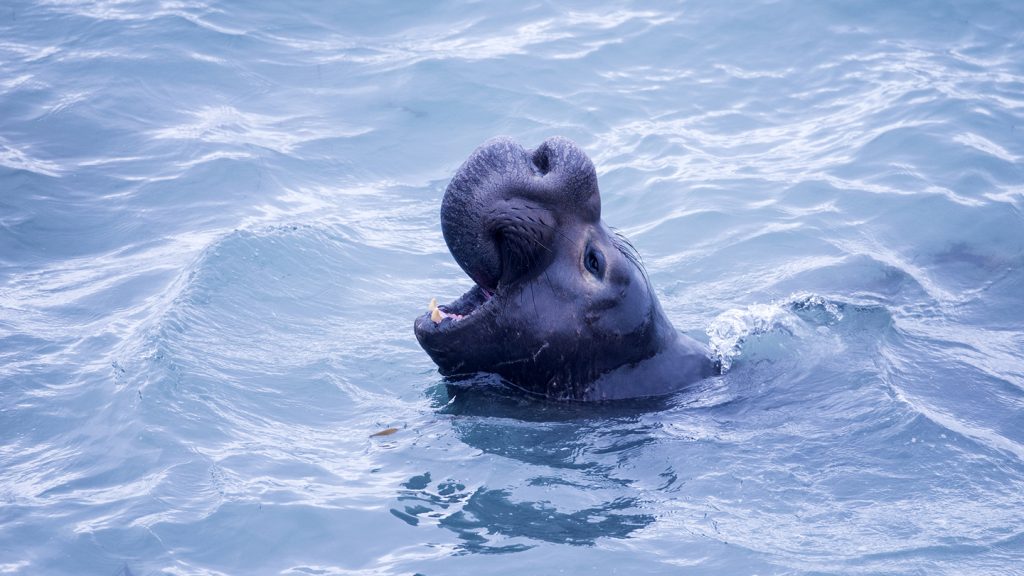
Northern elephant seals are the true masters of the power nap.
On long trips out to sea, the seals snooze less than 20 minutes at a time, researchers report in the April 21 Science. The animals average just two hours of shut-eye per day while swimming offshore for months — rivaling African elephants for the least sleep measured among mammals (SN: 3/1/17).
“It’s important to map these extremes of [sleep behavior] across the animal kingdom to get a better sense of the evolution and the function of sleep for all mammals, including humans,” says Jessica Kendall-Bar, an ecophysiologist at the University of California, San Diego. Knowing how seals catch their z’s could also guide conservation efforts to protect places where they sleep. Northern elephant seals (Mirounga angustirostris) spend most of the year out in the Pacific Ocean. On these odysseys, the animals forage around the clock for fish, squid and other food to sustain their enormous bodies, which can be as hefty as a car (SN: 2/4/22). Because northern elephant seals are most vulnerable to sharks and killer whales at the surface, they come up for air only a couple minutes at a time between 10- to 30-minute deep dives (SN: 9/28/02).
“People had known that these seals dive almost all the time when they’re out in the ocean, but it wasn’t known if and how they sleep,” says Niels Rattenborg, a neurobiologist at the Max Planck Institute for Biological Intelligence in Seewiesen, Germany, who was not involved in the study.
To find out if the seals sleep while diving, Kendall-Bar and her colleagues developed a watertight EEG cap for the animals. Using the cap and other sensors, the team tracked the brain waves, heart rates and 3-D motion of 13 young female seals, including five at a lab and six hanging out at coastal Año Nuevo State Park north of Santa Cruz, Calif. EEG data recorded while seals were slumbering revealed what the animals’ naptime brain waves looked like.
Kendall-Bar’s team also took two sensor-strapped seals from Año Nuevo and released them at another beach about 60 kilometers south. To swim home, the seals had to cross the deep Monterey Canyon — a locale similar to the deep, predator-fraught waters frequented by seals on months-long foraging trips. Matching the seals’ EEG readings to their diving motions on this journey showed how northern elephant seals sleep on long voyages.
The animals first swim 60 to 100 meters below the surface, then relax into a glide, Kendall-Bar says. As they nod off into slow-wave sleep, the animals keep holding themselves upright for several minutes. But as REM sleep sets in, so does sleep paralysis. The animals flip upside-down and drift in gentle spirals toward the seafloor. Seals can descend hundreds of meters deep during these naps — far below where their predators normally prowl. When the seals wake after five to 10 minutes of sleep, they swim up to the surface. The whole routine takes about 20 minutes.
Looking for that distinct sleep dive motion, the researchers could pick out naps in the dive records of 334 adult seals that had been outfitted with tracking tags from 2004 to 2019. Those sleep patterns revealed that northern elephant seals conk out, on average, around two hours per day while on months-long foraging missions. But the seals sleep nearly 11 hours per day while on land to mate and molt, where they can indulge in long, beachside siestas without worrying about predators. “What the seals are doing might be something like what we do when we sleep in on the weekend, but it’s on a much longer timescale,” Rattenborg says. He and his colleagues have found a similar feast-and-famine style of sleep in great frigate birds, which fly over the ocean (SN: 6/30/16). “Although they can sleep while they’re flying,” he says, “they sleep less than an hour a day for up to a week at a time, and once back on land, they sleep over 12 hours a day.”
Curiously, northern elephant seals’ sleep habits are quite different from how other marine mammals have been seen sleeping in labs. “Many of them … sleep in just half of their brain at a time,” Kendall-Bar says. That half-awake state allows dolphins, fur seals and sea lions to practice constant vigilance, literally sleeping with one eye open.
“I think it’s pretty cool that elephant seals are doing this without [one-sided] sleep,” Kendall-Bar says. “They’re shutting off both halves of their brain completely and leaving themselves vulnerable.” It seems the key to enjoying such deep sleep is sleeping deep in the sea.