Exclusive: Nepal to maintain non-aligned policy in friendly relations with neighbors, hopes China’s strengths will help bolster economy: Nepalese PM

Editor's Note:

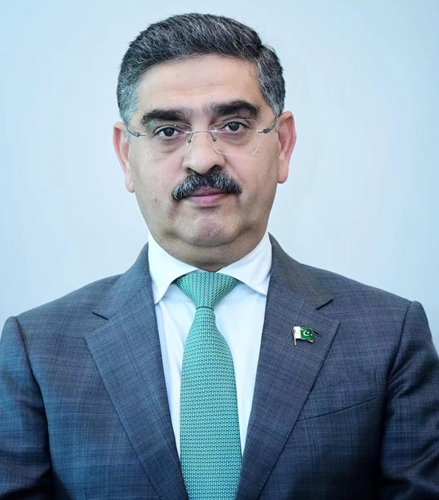
At the invitation of Chinese Premier Li Qiang, Nepalese Prime Minister Pushpa Kamal Dahal Prachanda commenced his five-day state visit to China from September 23 to 30, his first visit to China since the start of his third term as the Prime Minister of Nepal. The 69-year-old is a legendary figure in Nepal. Born in a poor Brahmin farming family in Pokhara in 1954, he witnessed abject poverty in his youth. Determined to change his country's corruption and a ruling exploitative class, Prachanda embarked on a revolutionary path to transform Nepal's destiny. In 2008, he became the first prime minister of Nepal after the abolition of the monarchy. In 2016, he assumed the office of prime minister for a second term, and in November 2022, this veteran of Nepalese politics made a comeback for a third term. As a staunch socialist and a long-time member of the Communist Party, Prachanda has deep ties to China. After assuming office as the first term as prime minister of Nepal, the first country he visited was China. In 2008, he also came to Beijing to attend the opening ceremony of the Beijing 2008 Olympic Games.

Global Times reporters Hu Yuwei and Bai Yunyi (GT) recently interviewed Prachanda while on his official visit to China. He told the reporters that part of his dream when he first embarked on the revolutionary path has been realized. During this third term, he hopes to promote long-term unity, stability, and economic prosperity in Nepal, and for this, he will seek to strengthen cooperation with China within the framework of the Belt and Road Initiative (BRI). He believes that China's experience in development has provided valuable insights for his government in improving the socio-economic conditions of vulnerable groups within Nepal.

GT: This is your third term as the Prime Minister of Nepal. Your premiership has great expectations attached to it. Can you please elaborate on the key priorities your administration has to lead Nepal into a new era of prosperity?

Prachanda: 
I am committed to the task of guiding the country toward the path of prosperity. Our foremost concerns are peace and prosperity. The current government has been focused on accelerating the truth and reconciliation process. Our objective is to achieve both domestic and international peace, and we are committed to expediting the peace-building initiatives through which we can successfully lead the country out of the transitional phase. Ensuring comprehensive peace, effective governance, upholding the rule of law, fostering national unity, and achieving political consensus are necessary for long-term stability of the nation and fostering a robust economic environment.

GT: Will relations with China become one of your administration's diplomatic priorities? What are your expectations for China-Nepal relations during your tenure?

Prachanda:
 China-Nepal relations consistently serve as a remarkable example of good neighbourliness. China occupies an important place in Nepal's diplomatic priorities. Nepal-China relations are based on millennia-old cultural, economic, and people-to-people ties, and are guided by the principles of peaceful coexistence, harmony, goodwill, and mutual trust. Nepal has unwavering support for the one-China principle, which is committed to not allowing any kind of anti-China activities on our soil. We also highly value China's unconditional support for Nepal's socio-economic development and territorial integrity, which have been the hallmarks of our cordial and neighbourly relations. 

I am confident and optimistic that China-Nepal relations will be further consolidated, which will reach a new height during my tenure. We have accorded priority to develop cross-border connectivity networks, including roads, railways, transmission lines, airways, and telecommunications. Our top priorities include establishing cross-border economic zones, expanding trade and investment-related infrastructures at border points, and early implementation of previously agreed bilateral agreements and understandings. 

We are fully committed to accelerating the construction of cross-border railways and electricity transmission lines as early as possible. Nepal attaches greater importance to all cross-border connectivity projects; we anticipate a similar commitment from the Chinese side as well. 

Enhanced air connectivity between China and Nepal is another important sector that would strengthen China-Nepal relations and cooperation. If we operate flights from Lumbini and Pokhara airports to different Chinese cities and the vice versa, it would significantly help in revitalizing Nepal's tourism sector and creating job opportunities in Nepal.

Enhanced air connectivity between China and Nepal is another important sector that would strengthen China-Nepal relations and cooperation. If we operate flights from Lumbini and Pokhara airports to different Chinese cities and the vice versa, it would significantly help in revitalizing Nepal's tourism sector and creating job opportunities in Nepal.

Nepal has a huge trade imbalance with China. Nepal possesses immense potential in organic staple foods, fruits, vegetables, and dairy products, while China possesses significant technological, production, and marketing prowess. We hope that China will assist Nepal in supplying advanced agricultural and food processing technology with fresh investment to Nepal, which would enhance our agricultural exports and reduce the trade deficit. We are optimistic that China will open its huge market to Nepali agro-vet products, medicinal and aromatic plant-based goods, cosmetics, and handicrafts. We also seek Chinese investments in the development of hydrogen energy which would benefit both of our countries in producing clean energy and reduce carbon emissions.

We are keen to explore greater business opportunities for Nepali art forms, such as thangka paintings, carpets, and other woollen products in the Chinese market. 

Chinese support for the development of technical and vocational education is immensely important. China and Nepal have enjoyed friendly people-to-people relations and cultural cooperation for centuries. Mutual trust and cooperation have been the fundamental pillars of China-Nepal relations, which will continue in the future as well.

China and Nepal must make common efforts to address the issues related to the impact of climate change in the Himalayan region and enhance all-round trans-border cooperation to address the issues that have impacted both countries. Nepali government is eager to collaborate with China to promote regional peace, prosperity, and development.

GT: When you first took office as the prime minister of Nepal, the first country you visited was China. Now on your third term in office, what agenda will your current visit to China entail? 

Prachanda:
 I have consistently prioritized fostering friendly relations and cooperation with China. Our two countries are actively collaborating on various issues and extending cooperation through diplomatic channels. 

Our key priorities with China include early and time-bound implementation of previously agreed upon agendas and understandings. At the same time, we want to further boost economic cooperation. Our particular emphasis is to attract more Chinese direct investments in Nepal, promote trans-Himalayan connectivity networks, increase Nepali exports to China, and address Nepal's trade deficit.

GT: The current economic situation in Nepal is challenging with inflation at a near six-year high. Foreign exchange reserves continue to drain away, and basic commodities are becoming increasingly dependent on imports. What are your next steps for economic revitalization? Will it involve the strengthening of economic cooperation with China through such initiatives as BRI projects?

Prachanda:
 Nepal urgently requires to create more jobs in order to address the unemployment problem, enhance productivity, expand the output of exportable goods and services, explore new markets for export, control inflation, and maintain trade balance. These objectives stand as my foremost priorities. For this, we are collaborating with planners, economists, industrialists, business leaders, and various stakeholders to identify suitable solutions to these challenges. 

Emphasis has been placed on prioritizing policies and initiatives that foster a favorable investment climate, thereby drawing increased foreign investment to sectors that lack adequate domestic capital and technology. This approach is aimed at generating an environment conducive to growth and development.

China has ascended to become the world's second-largest economy, showcasing remarkable achievements in the socio-economic transformation of its society. Notably, China serves as a significant pillar of economic support for Nepal. Since the establishment of diplomatic relations between Nepal and China in 1955, China has played an important role in assisting Nepal's infrastructure and development endeavors. Many of these projects hold immense importance for our nation's progress. 

As China continues to advance, its support and investment in Nepal are continuously growing. Nepal views China's development trajectory as an opportunity, with the BRI serving as a suitable platform for enhancing trans-Himalayan multidimensional connectivity. This connectivity has great potential for realizing Nepal's economic goals while acting as a vibrant bridge between the two largest economies in Asia and also between China and South Asia. A Memorandum of Understanding (MOU) has been signed between China and Nepal, solidifying mutual commitment to the BRI. We are fully prepared to take the maximum benefits from this cooperative framework.

The present government attaches paramount importance to investments from China. We are equally prepared to engage in discussions and resolve any obstacles that Chinese investors might encounter.

GT:  We are closely following the developments of the China-Nepal railway project. Do you have the will to push this project forward during your tenure?

Prachanda:
 The Nepali people have high expectations for the China-Nepal railway, and they are eager for the railway project to commence as soon as possible. Once completed, the railway will provide Nepal with an alternative means of bulk transportation and will hold immense significance for Nepal's trade diversification efforts and transit options.

The primary concern associated with this project is how quickly we can bring it to fruition. You must be aware that the construction of this project requires a substantial amount of resources that Nepal alone cannot afford. In such a situation, we have no choice but to rely on external funding. However, we also share concerns that the size of the loan for this project and terms and conditions should be manageable for the Nepali economy. Feasibility studies are currently underway, and we hope that the report will be available soon. Following that, we will need to explore appropriate funding modalities for the project. Under my leadership, this government is prioritizing the early completion of the study, and I hope to initiate the construction of this visionary project during my tenure.

The China-Nepal railway is a monumental project, and the people of Nepal are eager to see it realized. It is not critical for this project to commence during my term; what truly matters is that we have a collective dream of connecting Nepal and China through a railway system.

GT: Many people are concerned about how Nepal will handle its relations with China and India in the future. How will you guide Nepal's relations with these two neighbors?

Prachanda:
 Nepal's relations with both China and India are guided by principles of good neighborliness, peaceful coexistence, and a non-aligned foreign policy. Nepal deals with China and India independently. Our relationship with one neighbor will not be influenced by our relationship with the other, nor will we seek to play one against the other. Both neighbors are close friends and important development partners. We will continue to develop our relationships with both the neighbors on a bilateral basis. If any differences arise with either of them, such issues will be resolved through friendly bilateral negotiations. 

Our relations with both our two immediate neighbors are consistent and clear. We want friendly relations with them and at the same time we want to see friendly and cooperative relations between our two neighbors as well.  Their amicable and cooperative relations will also help Nepal. Personally, I am committed to promoting and am willing to assist in fostering close and harmonious neighborly relations between both our two important neighbors. 

Nepal respects the interests of both China and India. We emphasize the development of a win-win cooperative model that benefits all three countries.

GT: As we all know, you are a socialist. Do you believe that socialism is still relevant in Nepal in the third decade of the 21st century? If so, why?

Prachanda:
 Nepal's Constitution defines Nepal as a socialism-oriented state. In my view, socialism and Chairman Mao's ideas and teachings remain relevant to transform Nepal into a socialist country.

Under the socialism and the leadership of Mao, the Communist Party of China (CPC) established the People's Republic of China. The CPC developed its unique path to socialism with Chinese characteristics. 

Similarly, Nepal will determine its own path as a socialism-oriented country that suits its historical political development and current geopolitical realities. It's not about Nepal imitating China's socialism and Chairman Mao Zedong. China's socialism and Mao's ideas offer us valuable insights to improve the socio-economic status of the oppressed and economically disadvantaged class of people.

GT: You are a veteran politician who has been active in Nepali politics for decades. Now looking back, do you believe you have realized your dreams and goals when you first fought in the revolution?

Prachanda:
 I should say our dreams have been partially realized. Politically, the country has overthrown a centuries-old monarchy and has been transformed into a republic. This would not have been possible without our "People's War." Now, in the eyes of the constitution and laws, all citizens are equal. The country has adopted inclusive policies protecting the basic rights of people from all walks of life. From the highest level such as parliament and other constitutional bodies to the lowest level of political representations such as ward committees, from government institutions to cooperatives, from recruitments in government jobs to student admissions in colleges, certain reservations have been ensured for people from marginalized groups like women, the economically poor, and the underprivileged classes. This remarkable achievement was institutionalized through the constitution promulgated in 2015. 

Despite achievements made in several areas, I must admit that much remains to be done in the economic sector. Economic, technical, and educational advancements take a longer time to show visible results. To achieve progress in these sectors, we need consistent, long-term efforts, and most importantly national consensus. We are trying to develop our strategy and policy to achieve long-term development goals in close consultation and collaboration with all Nepali stakeholders, including the opposition parties and even others who have disagreement with the present political system. 

China, Pacific Island countries jointly tackle challenge of climate change under BRI

Editor's Note:

Today, issues related to the climate change, as a shared challenge faced by humanity, are receiving significant attention, and climate cooperation has become an integral part of the Belt and Road Initiative (BRI). The demands of the ecologically vulnerable and climate-affected Pacific Island countries have garnered particular attention. Global Times reporter Shan Jie (GT) recently talked with Chen Dezheng (Chen), vice director of the China-Pacific Island Countries Climate Change Cooperation Center and the director of the Research Center for Pacific Island Countries at the Liaocheng University in Shandong, to discuss how China, as a responsible major nation, has engaged in climate cooperation with Pacific Island countries in the recent years, the support China can offer to the South Pacific to reduce the risk of and harms from climate change, and the climate change-related demands shared by China and Pacific Island countries as developing countries via the BRI.
GT: The China-Pacific Island Countries Climate Change Cooperation Center has been in operation for a year and a half since its launch in April 2022. Under the BRI framework, what achievements have been made so far, and what plans are underway for further work?

Chen: Since its establishment, the center has organized five high-level academic conferences, including the China-Pacific Island Countries Climate Change High-level Dialogue. In June and November of 2022, it conducted two climate change training courses for officials, scholars, and technical personnel from Pacific Island countries (PICs).

The center has also signed cooperation memoranda and strategic cooperation agreements with institutions such as the University of the South Pacific, the National University of Samoa, the Chinese Academy of Sciences' Institute of Atmospheric Physics, and the Ministry of Natural Resources' Second Institute of Oceanography. It has established an atmospheric environment and source analysis laboratory, meteorological stations, and 10 research teams, including those focused on integrated photovoltaic and wind energy generation.

Additionally, it has implemented small-scale climate aid projects for PICs and undertook a 2 million yuan ($280,000) agricultural planting technology project in Tonga. The head of the climate center also visited PICs to introduce the progress of related work to various sectors in those countries. The center also hosted visits by prominent leaders from island countries, including the Speaker of the Parliament of Vanuatu and the Minister of Internal Affairs of Kiribati.

GT: What are the highlights of the cooperation on climate affairs between China and the PICs with the BRI?

Chen: China places great importance on the unique circumstances and concerns of PICs regarding climate change and is committed to helping these countries enhance their climate change resilience. China is dedicated to cooperating with island countries on various levels and through various means to improve their capacity for climate adaptation and climate change mitigation, and high-quality development.

In 2018, China supported the construction of a China-Vanuatu marine joint observation station, continuing collaborative efforts in ocean observation and disaster risk reduction with Vanuatu. To further advance maritime cooperation between China and Vanuatu, China's National Marine Technology Center, in collaboration with the Vanuatu Meteorology and Geo-Hazards Department (VMGD) and the Public Works Department (PWD), jointly planned the construction of Phase II of the China-Vanuatu joint observation station, including a meteorological station. The meteorological station's designs have been completed, and progress is being made in the construction of meteorological infrastructure.

China's National Marine Environmental Forecasting Center (The Tsunami Advisory Center of the Ministry of National Resources) utilizes the national ocean forecasting and warning platform to continuously track and analyze global undersea earthquakes and tsunami monitoring data, providing ocean disaster warning and alert services. In 2023, the center issued tsunami alerts for the Kermadec Islands waters of New Zealand, the waters of Tonga, the southern waters of the Fiji Islands, the New Caledonia waters, and the waters of Papua New Guinea, thereby assisting PICs in safeguarding against marine disasters.

Through initiatives such as the "The Marine Scholarship of China," China has provided scholarship opportunities in marine, environmental, and climate-related areas to PICs. This aligns with China's commitment to offer 2,500 government scholarship opportunities to PICs from 2020 to 2025.

GT: In August, you attended the Pacific Small Island Developing States (SIDS) High-Level Dialogue on Climate Change in Suva, the capital of Fiji, and conducted visits to countries like Kiribati and Tonga. From your understanding, what impact has climate change had on the local people's livelihoods and production? Are you also aware of the local perspectives on climate change?

Chen: After engaging with government departments and academic institutions in countries like Samoa, Tonga, Fiji, Kiribati, and others, we have learned that climate change has led to various natural disasters such as high temperatures, floods, droughts and storms, causing damage to the homes of the island nations' residents, reducing their incomes, and affecting their livelihoods significantly.

The interviewees of our research unanimously acknowledged the clear effects of global warming and believe that the intensity and frequency of natural disasters have increased over the last five years.

At the same time, the interviewees all recognized the helpful role of China's assistance in the island nations' efforts to address climate change. Regarding areas of assistance that should be strengthened in the future, more than half of the interviewees suggested enhancing vocational training, disaster relief supplies, and coastal zone planning and management. Over one-third of the interviewees believed that support should be increased in higher education, research facilities, research projects, financial aid, infrastructure, and technology transfer.

GT: The 2023 United Nations Climate Change Conference or Conference of the Parties of the UNFCCC (COP28) is scheduled to be held in the United Arab Emirates from November 30 to December 12. In terms of climate change, what are the demands of PICs? Have these demands received sufficient attention from developed countries?

Chen: The Pacific island region is one of the most severely affected areas by climate change, characterized by significant environmental sensitivity and vulnerability. Global climate change profoundly affects their right to survival and development. Global climate governance is crucial for the sustainable development of PICs. Over the years, PICs have consistently voiced their concerns on the international stage, advocated for a voice in global climate governance, presented their demands and requests for participation in global climate governance, and continuously pushed for the implementation of climate governance policies and measures in their region. They have become an important force that cannot be ignored in global climate governance.

China has taken into account the demands of island countries in addressing climate change and provided targeted climate governance assistance. However, as a vulnerable group in the international community, PICs still face some challenges in climate governance: Lack of sufficient international discourse power; limited economic capacity and insufficient funding for climate change adaptation; lagging infrastructure development for climate change adaptation; lack of core climate change technologies, and the need for further strengthening of their own efforts in climate governance.
GT: What are the paths for China climate governance collaboration with PICs?

Chen: China, as a responsible major nation in the field of climate governance, particularly in its determination and actions in addressing climate change, has instilled hope and bolstered confidence in island countries' efforts to combat climate change. China's principles of green development and sustainability within its ecological civilization construction align closely with the climate change objectives of PICs. The future of climate cooperation between China and the PICs holds even greater promise, facilitating the advancement of the China-PICs community of shared future.

In driving the process of climate cooperation with PICs, China should adopt a strategic approach that combines post-disaster management and source control, and interconnects short and medium- to long-term goals.

Guided by the principle of "harmonious coexistence between humans and nature," China and the PICs could strengthen the exchange and mutual learning of climate governance concepts.

China and island countries should advance high-quality BRI cooperation to enhance disaster protection infrastructure in island countries. China has emphasized the alignment of the BRI initiative with strategic goals, including practical infrastructure cooperation related to natural disasters such as storm surge protection. Exploring ways to enhance disaster resilience in island countries, including the planning and construction of disaster-resistant infrastructure like storm surge barriers and monitoring stations, water storage facilities to combat drought, and improved building standards, is essential.

China could support island nations in developing new energy sources. China encourages enterprises in the solar power and wind power sectors to "go global" and promote the development of exemplary green energy projects. Through flexible cooperation in green industry investment, China aims to help island nations address their energy needs sustainably.

Under the framework of South-South cooperation on climate change, China has allocated approximately 1.1 billion yuan in recent years to provide energy-efficient and new energy products and equipment to developing countries. China possesses technical expertise and operational experience in photovoltaic, tidal, and wave energy generation, as well as small-scale integrated energy solutions. It is recommended to assist island countries in assessing their suitability for solar, wind, and marine energy sources and tailor assistance projects accordingly to their natural conditions and development needs.

PICs have vast exclusive economic zones spanning over 30 million square kilometers, holding tremendous potential for blue economic development. China has actively promoted high-quality, green, and low-carbon development in the marine economy, with advanced expertise in seawater aquaculture and marine ranch construction. China has also established a comprehensive marine spatial planning technology system, which can assist PICs in achieving sustainable development that is low-carbon and environmentally friendly in various aspects.

Our two countries need to find a way to coexist: China, US scholars

Editor's Note:

As the dialogue between China and the US at the governmental level resumes, an enhanced Track II diplomacy, including the conversation between Chinese and US scholars, shows its particular role in easing the bilateral ties. In a recent webinar, Wang Wen (Wang), professor and executive dean of Chongyang Institute for Financial Studies at Renmin University of China, and Dennis Wilder (Wilder), a senior fellow with the Initiative for US-China Dialogue on Global Issues at Georgetown University and former National Security Council's director for China, answered questions concerning important issues such as China-US ties and the upcoming US election.

Host: As a top Asian affairs expert, you believe that the China-US relations are the most important relationship of the 21st century and we have to get it right. What is driving the tension in China-US relations? How can Washington and Beijing stabilize their relationship? And how do you think we can find a common ground again?

Wilder: I do applaud President Xi and President Biden for their meeting in Bali last year, and for trying to put a floor under what has become a very dangerously deteriorating relationship. The visit by the US secretary of commerce, where meaningful decisions were made on a working group to advance trade, investment and tourism was extremely positive. But I do have real concerns about whether the new floor under the relationship is actually made of hardwood, or if it's made of plywood, which can easily split.

For example, it's worth noting that no senior Chinese official has visited Washington in the seven months since the balloon incident and military-to-military relations are completely frozen with no end in sight to the impasse over the sanctions against the Chinese defense minister.

We have to be honest and say that trust really remains at an all-time low in this relationship. Beijing publicly states that Western countries, led by Washington, are committed to all-around containment and suppression of China. At the same time, the American national security strategy also bluntly asserts that China plans to replace the US as the world's leading power and that China is the only competitor with both the intent and means to reshape the international order.

As hopeless as the current impasse may seem, I would remind you that we have been through tough times before. We have been able to find diplomatic ways to bridge the divide before. What we need today is a similar, quiet, strategic discussion between two interlocutors chosen by the presidents to pursue a new Modus Operandi, an arrangement or agreement allowing conflicting parties to coexist peacefully, either indefinitely or until a final settlement is reached. 

In summary, let me just say that competition between the US and China is not going away. We are the world's leading powers, and this will be a permanent fixture of the international order. Strategic competition can actually be healthy and indeed can make both parties stronger. However, it also could turn into a zero-sum game, leading to a new cold war with disastrous consequences. 

Host: In recent months, we have seen the Secretary of State Antony Blinken, Treasury Secretary Janet Yellen, Special Presidential Envoy for Climate John Kerry, Doctor Henry Kissinger, and Secretary of Commerce Gina Raimondo visit China. What do you think both sides can do to prevent a sort of gray rhino event from happening and rebuild our relations?

Wang: A lot of people often talk about how to reconstruct the China-US relationship. I think for the governments of the two countries, the most realistic idea is how to prevent and manage a crisis. But for scholars like us, we should consider rebuilding China-US relations, which is to find a way for the two countries to coexist.

At present, both China and the US, especially this year, have a very popular and very similar argument that the other side will lose. In recent years, the American media are likely to say, China is weakening and has become a "ticking time bomb." Also, there are many people in China who say the US is weakening, declining or even collapsing.

Now these two types of similar views are deeply influenced by the realist theory in international relations. They believe that the so-called strategic competition between major powers can only be a zero-sum game.

But in fact, in the past few years, there has been a group of institutional liberals in Europe and the US who are studying the possibility of the future of permanent peace. I have three suggestions for the two countries' leadership. First, I think the two countries must break through the circles of the realistic theories. The future of China-US relations is not just a zero-sum game. Quite frankly, China is a country with 5,000 years of history and uninterrupted civilization, and the US has been the most successful country in modernization in the past 200 years. Both parties must acknowledge the other's great greatness, and neither should imagine that the other would collapse. Scholars from both countries must think about how China and the US can coexist and develop together.

The second point I want to share is that the public opinion elites of both countries must really understand each other in the post-pandemic era. After three years of physical isolation, we have become strangers. Finally, we have to maintain mutual communication.

Host: 2026 will mark the 250th anniversary of the founding of the US. Can the US and China establish a long-term sustainable framework for managing bilateral competition in the 21st century?

Wilder: 200 years ago, when we invented the American democratic system, institutions and government, Americans were frankly arrogant about that system. We believe it's the best system we had tried. But at the same time, China has 5,000 years of culture and a system based on Confucianism. That is quite different from the American value system. We have to find a way for these two very different models of governance and society to coexist, and we're struggling with that at this moment. So whoever the president is, in 2026, they have to have a better understanding of China, its history and its cultural strengths.

I think there are some in America who think that we can bring down the government of China, and that's a very dangerous thought. But I do think if a new president can be trained to understand better these cultural differences and how to bridge them, we can find a way to get along.

Host: Considering the US election in 2024, what is the potential for a thaw in relationship?

Wang: I think China and the US now have a major misunderstanding about each other. In my opinion, the two countries have to adapt to build a long-term relationship. 

But even though we have been in tension for a long time, it doesn't mean we can do nothing. I think at least there are four urgent things that could be done at a bilateral level. First, both sides should lift the sanctions imposed on some people of the other side, especially to enhance cultural exchanges at the scholarly level.

Second, in response to the trade war, I think the two sides should cancel some tariffs. The third point is to remove restrictions on high-tech investment, so that the investors on both sides can share the dividends of the technological progress. The fourth is to avoid the further deterioration regarding the Taiwan question. 

In short, it is impossible for China and US relationship to become very good in the foreseeable future. But even if we have to set our expectations low, we can do more on many practical issues.

Wilder: I think that increasing the dialogue in the China-US relationship is very important. But we have to be realistic about the next period and the difficulties that we're going to face. The American election cycle is going to be brutal. It's going to be a highly-fought battle between the Republicans and the Democrats, and the rhetoric is going to be very harsh on China.

I think you're going to find that both Democrats and Republicans are going to use China as a scapegoat, a way to distract from real issues in the US. I'm worried about the relationship and what can happen during this election cycle. So, I think it's going to be up to the professionals, the diplomats, the scholars, to try and keep the relationship stable while getting through a period that may be tough.

China and Vietnam have ability to promote ties amid US courtship with Hanoi

After attending the G20 Summit in New Delhi, US President Joe Biden made a short visit to Vietnam. In Hanoi, the US and Vietnam elevated their relationship to a comprehensive strategic partnership, mirroring the comprehensive strategic partnership of cooperation between China and Vietnam in the new era. According to some foreign media outlets, the upgrade allows US-Vietnam ties to reach the same tier as Vietnam's relations with China, Russia. It appears that the US' strategy of encircling China from the south has made new progress.

Given the South China Sea dispute between China and Vietnam, the US-Vietnam relationship has undergone a smooth progression in recent years. In 2016, former US president Barack Obama visited Vietnam, becoming the third US president to visit the country after the Vietnam War. Then both Donald Trump and Biden made their visits there. While the US hopes to turn Vietnam into a "second Philippines," it is aware of the challenges in achieving this goal and is willing to settle for less.

With substantial progress in US-Vietnam relations, the US hopes that Vietnam can absorb some industries transferred from China and become a new center for low-cost manufacturing. Biden's visit aligns with the US' desire to increase chip manufacturing and rare earth production in Vietnam. 

Vietnam is smart, benefiting from the long-term governance of the Communist Party of Vietnam, it has fostered stable strategic thinking compared to the Philippines. Hanoi is committed to developing strong relations with the US and Western countries as a bargaining chip in its competition with China over the South China Sea affairs. Simultaneously, Hanoi seeks to expand Vietnam's economic opportunities and gain access to advanced technology. The Communist Party of Vietnam has set a goal of building Vietnam into a strong and prosperous country which is able to stand shoulder-to-shoulder with powers around the world in 2045.

However, Vietnam will not form a strategic alliance with the US, nor will it align with the US on the Taiwan question or the issue of "isolating China." As long as China and Vietnam do not have intense conflicts in the South China Sea issue, Hanoi will continue to maintain friendly cooperation with China while pursuing friendly cooperation with Russia and the US. Vietnam aims to avoid offending any party and achieve a balance of interests from all three sides

Striking a balance among major powers serves Vietnam's interests best. China remains Vietnam's largest trading partner. Vietnam and China are neighbors, and any confrontation with China would have adverse consequences for Vietnam, leaving it with the only option of siding with the US and succumbing to Washington. 

Furthermore, Vietnam, being a socialist country, faces similar long-term political challenges as China. While the US is actively developing its relationship with Vietnam, there is also frequent criticism toward Vietnam's "human rights issues" from the US. The Vietnam Reform Revolutionary Party, primarily composed of descendants of Vietnamese refugees in the US, always aims at realizing a color revolution in Vietnam. 

Vietnam's national political stability always faces risks from the US and the West. China, on the other hand, serves as its biggest external support for political stability. The relationship between the Communist Parties of China and Vietnam serves as a solid bond.

Maritime disputes have long been an obstacle between China and Vietnam. Vietnam not only claims sovereignty over the Nansha Islands but also has ambitions for the Xisha Islands. These disputes cannot be resolved in the short term. However, siding with the US in the strategic competition between China and the US does not serve Vietnam's long-term political and economic interests, nor does it provide true strategic security. Therefore, Vietnam is likely to pursue a "Vietnamese-style neutral route" between China and the US, which will be more cautious and serious than the neutrality of the Philippines and India.

Chinese people need not worry about Vietnam's warm relationship with the US. Vietnam, with a population of about 98 million, belongs to the Confucian civilization circle. In Hanoi, one can find temples with Chinese characters and historical examination halls where imperial examinations were held. While Vietnam's economy is currently growing rapidly, at a speed that has surpassed that of China, its per capita GDP is just below $4,000, lower than that of Yunnan Province and Guangxi Zhuang Autonomous Region in China, and there is a significant gap compared to the Pearl River Delta. Vietnam has never surpassed China in terms of economic development.

Let us engage patiently with this southern neighbor as it seeks to maximize its interests in the strategic competition between China and the US. I believe that China and Vietnam have the ability to continuously promote their bilateral relationship in a positive and stable direction, benefiting both countries.

IMEC faces barriers of internal infrastructural issues, Western economic hegemony

At the recent G20 summit, the India-Middle East-Europe Corridor (IMEC) backed by the US, Europe and India under the Partnership for Global Infrastructure Investment was announced. This corridor aims to connect Europe, the Middle East and India with rail and shipping routes.

With Biden calling it a "really big deal" and National Security Advisor Jake Sullivan describing the project as "transformative," the project has already been described as one that counters China's Belt and Road Initiative (BRI), which has been signed up to by the majority of the world.

However, the working group tasked with drawing up a fuller plan, over the next sixty days, will have to confront some harsh economic realities relating to funding, material capabilities and the ideological outlook of the main countries involved.

When it comes to funding, let's not forget that the Build Back Better Plan undertaken by the G7 in 2021 to counter the BRI was consigned to the dustbin of history the same year it was announced.

The $1.7 trillion package (less than two years of US defense spending) was considered too costly.

Railway linking India, the Middle East and Europe would be the center piece of the IMEC. When it comes to infrastructure, the US and India do not set good examples for others to follow, yet they expect to compete with China which has first-rate infrastructure. Rather than build something abroad, based on hegemonic competition against China, it would be better for the US and India to demonstrate they can solve the basic democratic infrastructural needs of their citizens first.

Even if internal infrastructural issues and financing can somehow be overcome, the ideological attitude of maintaining economic hegemony that the West holds toward the Global South acts as a barrier to the IMEC. Only with gunship diplomacy could the US force states to buy exclusively from expensive Western companies. Even then, many components will be sourced from China.

At any rate, we are in a multi-polar world now. The Saudi-Iran rapprochement, the enlargement of BRICS, and the good relations in the region toward Russia and China show that the Middle East refuses to take sides and will trade with all. Another Iraqi-style invasion in the region to maintain US-led economic predominance would be foolhardy, as such, the West must be competitive in the market.

Currently, Saudi Arabia is choosing China when it comes to rail construction - though this too is an international effort that pulls in Western companies. The China Railway 18th Bureau Group has already completed the 450km-long Mecca-Medina High-speed Railway and is working on the Medina Tunnel Project along with the Saudi Rua Al Madinah Holding Company, Canada's WSP and US-based Parsons. The linking of Saudi's eastern and western seaboard, while led by China, is also a joint international project. This further highlights the lunacy and impracticality of fencing off the world economy.

One of the major forces driving US hegemonic attempts is its capitalist system which seeks immediate profits. This motivation has led to the decay of US infrastructure and a lack of long-term railway investment; a similar "democratic" system sees India's infrastructure in shambles too. Furthermore, much of the Global South remains in tatters after being harvested by the US military-industrial complex, which seeks quick profits from war and sees development as a threat to its economic hegemony.

In contrast, The BRI is premised on long-term social economic planning. Some projects will not be profitable for decades - many will provide immense social-economic benefits but no profit extraction for private capital. China's socialist system subordinates capital for the democratic good of society and it's because of this that it has the world's largest high-speed rail network, which it can then sell abroad at competitive prices.

In an attempt to conceal China's governing advantages and foresight, the corporate press labels Chinese-involved projects that don't reap immediate profits as "white elephants." Indeed, the debt trap narrative has been constructed to conceal the BRI's long-term planning and misdirect attention from private capital lending, which is far more severe than Chinese loans and the source of much suffering in the Global South.

Certainly, should the IMEC get off the ground without Chinese involvement and sell expensive Western infrastructure, then it will be interesting to observe the Western ideological apparatus scramble to justify how their venture is superior to the BRI, the initiative that the majority of the world has already voluntarily signed up to. There is still an open invitation for Europe, the US and India to join!

The author is an independent international relations analyst who focuses on China's socialist development and global inequality.

S.Korea should not mistake China's goodwill for weakness

Yun Duk-min, the South Korean ambassador to Japan, stated that "high-level" talks are underway for a China-South Korea-Japan summit poised to happen this year, and there may be a "Camp David effect" that prompted China to reach out to its neighbors, Bloomberg reported on Friday. Yun also emphasized that the trilateral meeting among South Korea, Japan and China will not harm the relationship between Seoul and Washington. Given that Yun is not only the South Korean ambassador to Japan but also one of the key foreign policy aides during the election campaign of South Korea President Yoon Suk-yeol, his words reflect a serious misunderstanding of South Korea's own position, and trilateral cooperation among China, Japan and South Korea.

Firstly, South Korea overestimated the impact of the Camp David summit on enhancing Seoul's international status. Yoon has been proactively promoting the improvement of South Korea-Japan relations and participating in strengthening trilateral cooperation with the US and Japan, with the aim of enhancing South Korea's international status. However, in this process, the US once again demonstrated its ability to coerce and entice its allies, obtaining everything Washington wants while South Korea lost what it should not have lost. Apart from making "contributions" to the US-Japan-South Korea alliance, South Korea did not gain any substantial benefits. The Camp David summit did not enhance South Korea's status, but rather the US' status. In fact, for the Chinese people, South Korea did not increase its international status but rather diminished it by further ceding its sovereignty to the US and Japan.

Secondly, South Korea has misinterpreted the status of the trilateral summit among China, Japan and South Korea. Yun has portrayed the trilateral summit as a result of the strengthened cooperation among the US, Japan and South Korea, which is a distortion of the original intention of the China-South Korea-Japan high-level talks. 

The trilateral summit among China, Japan and South Korea began in November 1999, and in December 2008, the leaders of the three countries met for the first time outside the 10+3 framework in Fukuoka, Japan, and decided to build a future-oriented comprehensive cooperative partnership. The three countries also decided to hold separate annual trilateral summit meetings on a rotating basis while keeping the mechanism of trilateral leaders' meeting in the sidelines of the 10+3 Summit.

Thirdly, South Korea intentionally conceals the negative effects of Camp David summit. The so-called "effect" of the Camp David meeting among the leaders of the US, Japan and South Korea did exist, but it did not stimulate China's desire to resume the trilateral meeting among China, Japan and South Korea. Instead, it stimulated neighboring countries to rethink how to respond to the "new cold war" initiated by the US, Japan and South Korea. 

North Korea's leader Kim Jong-un recently visited Russia. The US, Japan and South Korea never reflect on who first created the division in Northeast Asia and who has been pushing for the formation of a "new cold war" pattern in Northeast Asia. Instead, they are shifting the blame and claiming that North Korea and Russia's cooperation will lead to a more aggressive response from the US, Japan and South Korea. 

China's stance toward cooperation among China, Japan and South Korea has always been consistent. China attaches importance to such cooperation and believes that trilateral cooperation is in the common interest of the three countries. China also supports South Korea as the chair country for hosting this meeting. However, South Korea should not perceive China's support as a sign of weakness or as a result of Seoul leaning toward the Washington and Tokyo to gain a so-called greater say. It would be very dangerous if South Korea has such thoughts, and we hope that South Korea will wake up to this reality as soon as possible.

Tsai’s last ‘Double Ten’ speech sounds a ‘marching brass’ for DPP’s new round of provocation

Taiwan regional leader Tsai Ing-wen delivered her "Double Ten" (October 10) speech on Tuesday. This is Tsai's last "Double Ten" speech before she steps down in May 2024, but also a continued vow by the Democratic Progressive Party (DPP) to step up its provocations and rash actions in the future.

It is clear to see what Tsai wants to achieve through this year's speech. Firstly, she gave a long list of her accomplishments since coming to power, which aims to boost DPP's votes for the upcoming elections. Secondly, the Tsai authorities have been pushing forward "de-sinicization" and promoting "incremental independence" on the island of Taiwan. In this year's "Double Ten" speech, Tsai intended to draw Taiwan residents further into her version of "Taiwan independence."

As Tsai's terms come to an end soon, some interesting changes of rhetoric can be witnessed in her Tuesday address. In her "Double Ten" speech in 2019, Tsai specifically mentioned that her authorities "will not act provocatively or rashly" on the cross-Straits issue, and then she didn't mention "We do not provoke" until this year.

With such a seemingly softened tone, Tsai is actually speaking for the DPP and Lai Ching-te, the party's candidate for regional leadership. On the one hand, as China-US relations have shown signs of easing recently, the DPP now needs to assure Washington that it will not intensify its provocations toward the Chinese mainland. On the other hand, the DPP can also use the promise of "not acting provocatively or rashly" to fool voters on the island who are worried that cross-Straits relations will face even greater challenges if Lai becomes the next regional leader.

In addition, experts told the Global Times that Tsai seeks to leave some leeway for herself by continuing to tone down her provocations, because if a non-Green camp comes to power, then there might be a possibility that she will have to face political liquidation for what she has done as the regional leader.

Regardless of how Tsai gushed about how she wants peace in the Taiwan Straits, in the past seven years we have seen Taiwan enhancing its provocations and rash actions under her leadership. During this period, the DPP authorities' refusal to recognize the 1992 Consensus has grown blunter, and its stance of seeking US support for "Taiwan independence" has become firmer. Taiwan's relationship with certain countries unwilling to adhere to the one-China principle has become closer, while the provocation of the one-China principle in the international arena has grown stronger. As a result, the cross-Straits relations have reached a new freezing point.

In last year's "Double Ten" Speech, Tsai showed her desire to "make Taiwan a Taiwan of the world, and let us give the world an even better Taiwan." But the world will only become a better place if peace and stability in the Taiwan Straits remain - that is when the Taiwan secessionists stop their dangerous moves to stir up troubles and tread on the mainland's red line.

Unwrapping the DPP's pursuit of Taiwan's "visibility" in the international community - or in Tsai's words, "making Taiwan a Taiwan of the world," we see a vicious ambition of pushing for "Taiwan independence." But the more the DPP takes action to achieve this goal, the more the world understands the importance of adhering to the one-China principle.

As Taiwan's elections approach, Tsai's last "Double Ten" speech signifies the beginning of a new round of tricks the DPP will play on cross-Straits issues. However, there is no future for Taiwan secessionists; reunification will and must happen. No matter what kind of approach the DPP authorities will take to promote "Taiwan independence," extermination will ultimately be the end of these forces.

China, Greece have vast rooms for cooperation in improving economy, social welfare and mitigating climate change

Editor's note:
China and Greece share a solid foundation of political trust and enjoy robust trade and economic cooperation. This partnership holds substantial potential within the context of the China-CEEC cooperation mechanism and China's Belt and Road Initiative (BRI), which marks its10th anniversary this year. Piraeus Port's transformation led by China COSCO Shipping has been nothing short of extraordinary. In a recent exclusive interview, the Chinese Ambassador to Greece Xiao Junzheng (Xiao) told the Global Times reporter (GT) Yin Yeping how bilateral relations can further deepen and flourish in the coming years.

GT: This year marks the beginning of the second decade of cooperation between China and the Central and Eastern European countries (CEEC). In this context, how could China, Greece, and CEE countries engage in deeper and broader cooperation?

Xiao: Since the initiation of the cooperation mechanism between China and the CEEC, a comprehensive cooperation framework covering more than 20 areas has been established. Many cooperation projects have yielded fruitful results, with bilateral trade doubling over the past decade, and Chinese investment in CEEC increasing sixfold. The China-CEEC cooperation mechanism has become an important platform for the continuous deepening of friendly relations and the ongoing expansion of cooperation between China and the region.
This year marks the beginning of the second decade of cooperation between China and the CEEC. In China's journey toward modernization, Greece can become a significant partner. Likewise, in Greece's efforts to enhance its national competitiveness, China could be a crucial partner, providing assistance and support.
China and Greece enjoy a high level of political mutual trust, a strong foundation for cooperation, and significant potential for the future within the framework of the China-CEEC mechanism. In the future, cooperation can focus on the following aspects:
Firstly, promote mutually beneficial and practical cooperation. The Greek government has prioritized digital transformation and the development of a green economy. Both China and Greece can further align their growth strategies, while expand cooperation in green economy, digital economy, technology innovation, and the service industry.
Secondly, enhance connectivity. China COSCO Shipping's investment project at Piraeus Port and the China-Europe Land-Sea Express Line originating from Piraeus Port have evolved into crucial links between land and sea, effectively connecting Europe and Asia.
In the future, China and Greece can strengthen their commitment to the comprehensive development plan for Piraeus Port, enhance cooperation in trade, make new contributions to stability of the China-Europe industrial and supply chains, promoting economic integration in the Balkans, and advancing the EU integration.
Thirdly, accelerate cultural and tourism cooperation. China supports Greece in hosting the 6th China-CEEC High-level Conference on Tourism Cooperation. China is willing to work with Greece to do a good job in cooperation regarding China-Greece Year of Culture and Tourism, continue to implement the Joint Action Program 2022-2024, build tourism brands, and initiate a broader spectrum of diverse cultural and tourism cooperation.

GT: How do you view the significance of Chinese companies' achievements in Piraeus Port for promoting economic recovery of Greece and the development of China's international maritime industry? What insights can the success in Piraeus offer for future cooperation?

Xiao: Since China COSCO Shipping Group took over the operations of Piraeus Port, they have managed it actively and prudently, making efforts to expand its market presence. This century-old port has experienced a remarkable revival and achieved significant growth, propelling the rapid advancement of local logistics and industrial chains.
Currently, the Piraeus subsidiary of COSCO Shipping has invested over 1 billion euros in port construction. The Piraeus Port has seen a significant rise in container throughput ranking, climbing from 93rd place in 2010 to 29th place in 2021, establishing itself as a leading Mediterranean port. This development has directly created over 3,000 jobs for local community. In total, the efforts have contributed over 1.4 billion euros to local community.
Piraeus Port is the closest European port to the Suez Canal, making it a crucial gateway for Asian goods, including those from China, to enter Europe. Piraeus' development has attracted cargo from multiple countries as a transshipment hub to Europe, significantly enhancing international trade efficiency and reducing shipping costs.
The success of the Piraeus project serves as a vivid example of the BRI and stands as a significant achievement in the cooperation between China and Greece. As long as both China and Greece remain committed to their shared goals, uphold the principles of consultation, joint construction, and shared benefits, and continue to foster a spirit of cooperation and mutual prosperity, by aligning their national development strategies, it is believed that practical cooperation between China and Greece will continue to yield even more fruitful results in the future.
GT: There are voices trying to undermine the mutually beneficial cooperation between China and Greece, the narratives like "China's investment in global ports is a threat." How do you view these voices?

Xiao: China's promotion of the joint construction of the BRI is not driven by geopolitical maneuvering, nor does it pursue self-interest for hegemonic purposes. And, China does not seek to create disruptive alliances. Over the past decade since China introduced the initiative, it has consistently adhered to the principles of mutual consultation, cooperation, and shared benefits. As a result, the Belt and Road has evolved into a widely embraced international public good and a platform for international cooperation. There are some voices alleging that China's investment in Piraeus Port has "non-commercial purposes," which are entirely baseless.
The facts demonstrate that China's cooperation with relevant countries, including Greece, in port development is aimed at promoting economic and trade cooperation between nations. This cooperation contributes to local economic development, infrastructure improvement, and job creation. It is based on mutual benefit and results in win-win outcomes for all parties involved.
In my previous introduction, I highlighted the outstanding achievements that COSCO Shipping Group has secured in operating Piraeus Port. It has transformed Piraeus into a port of win-win cooperation, green development, economic growth and more. The international community has widely recognized these accomplishments, and high-ranking Greek officials, including the President and Prime Minister, have praised the mutually beneficial nature of this project.
In 2022, Piraeus Port also received awards such as the "Outstanding Contribution to Tourism Industry" award from the Greek Ministry of Tourism and the "Diamonds of the Greek Economy" award from Hellenic Shipping News. These accolades further illustrate the widespread recognition and approval of the Piraeus Port project by Greek society.
China's practical cooperation with countries around the world in infrastructure development, including port construction, strictly adheres to the principles of consultation, joint construction, and shared benefits. It aims to create more opportunities for mutual development. This cooperation is conducted transparently and openly, without posing any security threats to any country.

GT: With the optimization of anti-pandemic policies, Greece is expected to see more Chinese tourists. What do you think are the opportunities for cooperation between China and Greece in tourism and cultural exchanges?

Xiao: China and Greece are both ancient civilizations and significant global tourist destinations. People to people exchanges are essential components of practical cooperation. The tourism industry is one of the pillars of the Greek economy, contributing some 20 percent to Greece's GDP. China, with the world's largest middle-income population, has seen rapid development in the tourism market.
In the post-pandemic era, both China and Greece will continue to actively implement the 2022-2024 Joint Action Program, focusing on enhancing cooperation in tourism.
Both sides will make full use of existing tourism cooperation platforms and utilize platforms like the China International Travel Mart to promote bilateral tourism cooperation. Efforts will also be made to enhance visa processing efficiency, and increase direct flights.
I believe that the orderly recovery of China's outbound tourism will enhance the friendship between Chinese and Greek people, strengthen the ties of cultural exchange between China and Greece, and better leverage the tourism industry's significant role in promoting economic development and deepening the friendship between the two countries.

GT: The New Democracy party, led by Greek Prime Minister Kyriakos Mitsotakis, recently won a second four-year term. What are your expectations for bilateral cooperation in the coming months?

Xiao: The ancient Greek philosopher Aristotle once said, friendship is a single soul dwelling in two bodies. China and Greece are comprehensive strategic partners with a history of friendly exchanges dating back thousands of years. In the 51 years since establishing diplomatic relations, both countries have navigated the changing international landscape. Both sides have demonstrated mutual understanding and support on issues of core interests and major concerns. The two countries have become an exemplary model of peaceful coexistence and win-win cooperation between nations of different scales, systems, national conditions, and civilizations.

Following the re-election of the New Democracy Party government, they have continued to support the co-development of the BRI and cooperation between China and Central and Eastern European countries. They are willing to work hand in hand with China to deepen mutually beneficial cooperation.

I believe that in the future, under the guidance of the high-quality construction of the BRI, both sides will promote the realization of China's modernization model and Greece's enhancement of its national competitiveness. Together, both sides will nurture new areas of cooperation such as green development and the digital economy, bringing greater prosperity to the people of both countries.

GT: How do you evaluate the cooperation achievements between the two countries under BRI? And, in which areas could the two countries ramp up their cooperation?

Xiao: China and Greece, despite being geographically distant, have a history of communication dating back over 2,000 years through the ancient Silk Road that spanned east and west. Today, in the midst of deepening globalization, the cooperation in building the BRI is once again connecting the two great civilizations.
With the joint efforts of China and Greece, their mutually beneficial cooperation has yielded fruitful results. This has not only enriched the content of the comprehensive strategic partnership between China and Greece but also has brought tangible benefits to the people of both countries.
Since China COSCO Shipping took over the management of the Piraeus Port, the port has experienced a remarkable transformation. The container throughput has grown from 880,000 TEUs in 2010 to over 5 million TEUs today, making it a leading port in the Mediterranean.
The China-Europe Land-Sea Express Line, from its inception, has become the third trade corridor between China and Europe, in addition to traditional maritime routes and China-Europe freight trains.
China's State Grid Corporation's investment in the Greek national electricity grid project, and State Power Investment Corporation's acquisition of the Kafireas wind power project have alsoy generated significant economic and social benefits.
In the journey to develop green and digital economies and to build new national competitiveness in Greece, both China and Greece can strengthen their partnership through high-quality cooperation in the BRI. We can consolidate and deepen existing cooperation projects, advance connectivity cooperation represented by Piraeus Port and the China-Europe Land-Sea Express Line.

GT: In your opinion, what areas of deep cooperation could China and Greece engage to address climate change and promote green, low-carbon transformation?

Xiao: This summer, Greece experienced extreme high temperatures and wildfires, while many regions in China faced high temperatures and extreme rainfall. Both China and Greece are victims of global climate change and share common aspirations and motivations in addressing climate change.
China adheres to the concept of new development and actively promotes green and low-carbon development, fulfilling international commitments in addressing climate change. In recent years, Greece has also been proactive in addressing climate change issues, enacting clear emission reduction legislation, advancing energy structural adjustments, and vigorously developing a green economy.
The concept of green development is increasingly being reflected in the cooperation projects between the two sides.
Chinese new-energy vehicles have entered the Greek market this year. China and Greece have strengthened their strategic alignment in technology development under the framework of the China-Greece Joint Committee on Science and Technology Cooperation and the Belt and Road Science, Technology and Innovation Cooperation Action Plan.
In the Memorandum of Understanding on China-Greece Scientific and Technological Cooperation signed by the two countries' science and technology departments last year, addressing climate change emerged as a key area of collaboration, with a focus on forest management, challenges related to water resource biodiversity, and climate adaptation policies. Both countries have already established a solid cooperation foundation in green and low-carbon transformation fields such as biomanufacturing and solar energy.
China and Greece have vast rooms for cooperation related to mitigating global climate change by promoting green growth.

China’s solar power industry generates new income for locals as development accelerates

China's solar power industry is generating new income for residents in Yantai, East China's Shandong Province, with fruit, vegetables and other economic crops being planted under photovoltaic (PV) panels, according to a Monday press release.

On the hillside of Fajuan village in Yantai, PV panels continually turn sun lights into green energy to supply many households, while fruits, vegetables and Chinese Traditional Medicine crops planted under the panels brought new incomes for villagers.

"I received 2,000 yuan ($ 280 dollar) per mu for renting the land for the PV panels, and I grow cherry under the panel, which is a double income," said local resident Wang Hongkui.

A new solar power project in Yantai has recently been connected to the power grid and entered operation. The project combined local farming features with solar power, allowed villagers to plant organic vegetables, fruit, and herbs under the PV panels.

The PV power station can produce 70.22 million kWh annually, and bring over 500,000 yuan to more than 700 residents. The solar power can save 21,417 tons of coal and reduce 57,160 tons of carbon dioxide emission.

Yantai power company, under the State Grid Corporation of China, has established PV projects that combined fishery and PV, animal husbandry and PV and farming and PV. The share of power generation rose as established and gridded more new energy projects.

As of the end of September, Yantai's green energy generating capacity has reached highest amount in Shandong to 11.75 million kWh, accounted for 54.49 percent of the Yantai's total generating capacity.

According to data from the local energy administration, Shandong's the new energy generating capacity in the first half of 2023 reached 83.82 million kWh. The PV generating capacity surged by 120 percent to 49.46 million kWh compare to the end of 2020.

China has focused on green energy development in light of the country's "dual carbon" goals.

The Hangzhou Asian Games in East China's Zhejiang Province, as the latest example, applied green sporting venues equipped with wind, photovoltaic and other clean energy, has realized 100 percent green power generation.

Official data showed that China's electricity generated on renewable resource reached to 1.34 trillion kWh in the first half of 2023.